Every freestyle pull asks the shoulders to move freely while tape fights pool water. The right setup supports comfortable training without turning each stroke into a restriction.
Shop CannaTape Sport kinesiology tape for swimmers
Kinesiology tape for swimmers is flexible support that moves with the shoulders, upper back, and other hard-working areas during training. It can add a steady, comfortable feel without restricting stroke motion, but water wear still depends on clean, dry skin and sound application. A research review found that kinesiology tape may offer a small benefit for range of motion in some groups. Swimmers should treat tape as one part of an active recovery routine, not as a replacement for professional guidance or smart regular training decisions. CannaTape Sport pairs flexible tape with 10mg of hemp-derived CBD per strip and a hypoallergenic, latex-free adhesive suited to active, sweaty, or demanding aquatic settings.
Before choosing a tape or planning a pool session, it helps to understand what repeated pulls ask of your shoulders and upper back. Kinesiology tape for swimmers starts with upper-body demands, so the next step is mapping those demands to comfortable, mobile support. Here's how.
Kinesiology tape for swimmers starts with upper-body demands
Kinesiology tape for swimmers works best when it supports shoulder, lat, trap, and upper-back movement without restricting a natural stroke. The goal is a flexible cue for training comfort and body awareness during repeated pulls, not a stiff brace or a replacement for technique, rest, or professional guidance.
Repeated work above the head
Every swim stroke asks the upper body to repeat a wide movement pattern. The shoulder rotates while the lats, traps, and upper back guide the pull. Those areas keep working from the first warm-up lap through the last hard set. Even easy drills can involve many overhead reaches.
Swimmers often use tape during training as a light, flexible layer of support. Good swim-ready kinesiology tape should move with the shoulder instead of making each reach feel stiff. That balance matters during freestyle, backstroke, butterfly, and drill work.
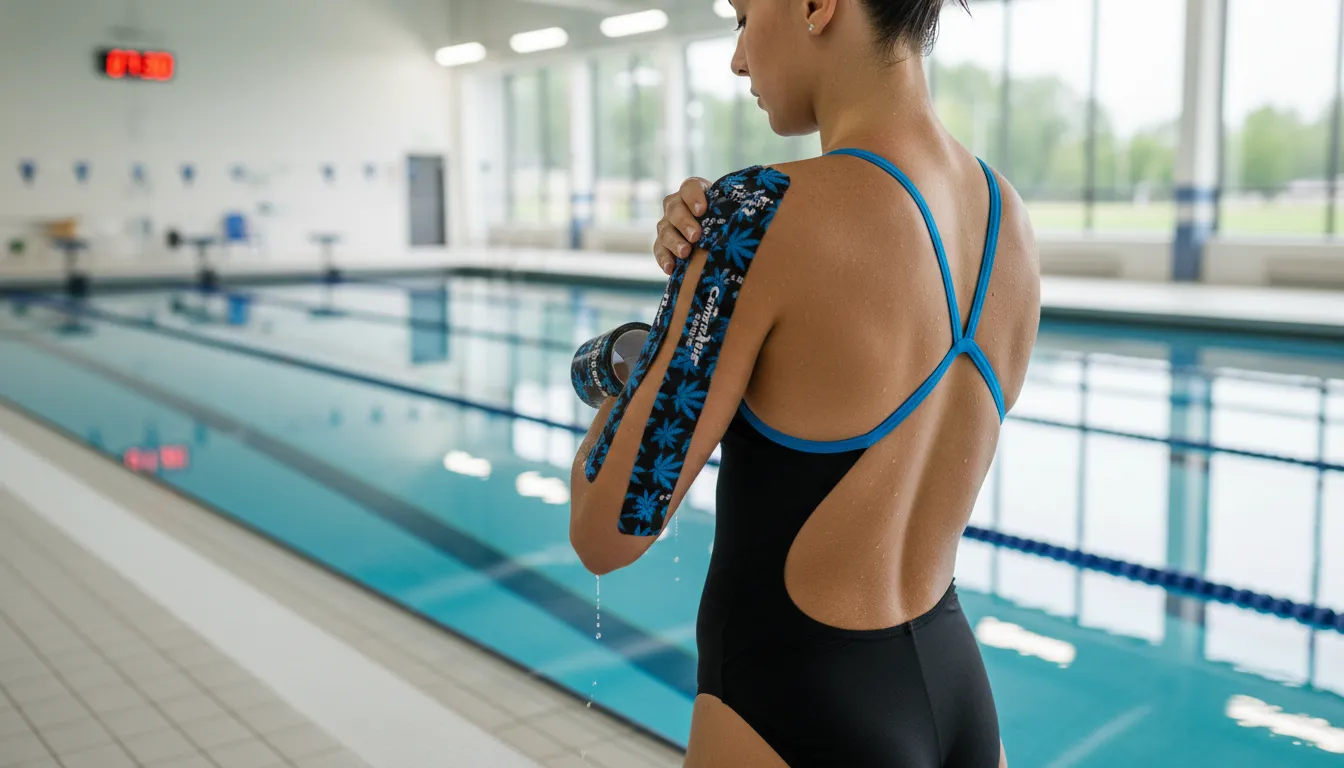
Support without a stiff brace
Kinesiology tape stretches, so it can follow the skin as the arm reaches and pulls. This makes it different from a rigid brace or strap. Still, athletes should keep expectations grounded. Research does not show clear gains in sports performance from tape alone.
The practical goal is active comfort during normal training. A swimmer may place tape around the shoulder, along the upper back, or over the lats. Placement depends on the movement cue and the area that needs more awareness. Each setup should allow a natural stroke.
- Shoulders: Tape can provide a flexible cue during rotation and overhead reach.
- Lats: Placement along the side of the back can draw attention to the pull phase.
- Traps and upper back: Tape may act as a reminder when posture starts to change during a long set.
- Chest and shoulder line: A thoughtful setup can help swimmers stay aware of alignment before entering the water.
Posture cues and free movement
Fatigue can change how a swimmer carries the shoulders between repeats. Tape gives the skin a steady touch cue, which may help the athlete notice that change. It does not control the stroke, but it can support better body awareness. Coaches can use that cue during drill feedback.
That awareness is most useful when paired with sound technique and a clear training plan. Swimmers can review an recovery routine for active swimmers to see where tape fits alongside rest, mobility work, and post-workout habits. Tape is one part of a wider routine, not a shortcut.
A swim-focused tape setup should respect the full reach of the stroke. Test the placement on dry land with slow arm circles, reaches, and easy pull motions. The tape should feel secure while the shoulder and upper back still move with ease. Remove or adjust a strip that limits motion.
Start with a simple setup rather than covering every upper-body area at once. This makes each cue easier to notice during the set. It also helps the swimmer learn which placement best matches a given stroke or drill. Simple changes are easier to compare from one practice to the next.
Can you use kinesiology tape when swimming?
Yes, kinesiology tape can be used during swim training when the tape and application suit an aquatic setting. Water, sweat, body oil, and repeated shoulder movement can still loosen the adhesive. Good skin prep and enough bonding time before entering the pool give the tape a better chance to stay secure.
CannaTape Sport uses a water-resistant, long-lasting adhesive made for active, sweaty, and aquatic settings. Its tape is also hypoallergenic and latex-free. Swimmers can explore the brand's tape designed for pool training while choosing an option for pool sessions and dry-land training.
Pool-ready application steps
Application matters as much as the tape itself. A review of kinesiology tape and sports performance notes that application method and timing should be considered when assessing results. Use the following steps before swim training:
- Choose the area you plan to support, then trim excess hair if it may catch under the adhesive.
- Wash the skin to remove oil, sweat, sunscreen, and lotion. Dry the area fully before opening the tape.
- Cut the tape to the needed length, then round each corner. Rounded edges are less likely to catch on swimwear or towels.
- Apply the first and last parts without stretch. Avoid touching the adhesive more than needed while placing each strip.
- Rub the full strip with firm, quick strokes. The friction helps activate the adhesive and press down loose edges.
- Wait before entering the pool so the adhesive can bond. Follow the product directions for the stated wait time.
Water and sweat wear checks
Check every edge before you start your warm-up. Press down any small lift, but replace a strip that has folded, shifted, or lost much of its grip. Do not wrap loose edges with another full layer, since extra tape may change how the area moves.
After swimming, rinse away pool water if the product directions allow it. Pat the tape dry instead of rubbing it with a towel. Let it air-dry before adding clothing or starting another training block.
Fit within a swim routine
No tape can promise the same wear time for every swimmer. Pool chemicals, session length, skin type, placement, and stroke pattern can all affect grip. Test kinesiology tape during practice before relying on it for a key training day.
Stop using a strip if the skin feels irritated or the tape becomes uncomfortable. For more guidance beyond pool wear, review this guide to post-swim recovery guide and follow the tape's application directions.
What is the best kinesiology tape for swimming?
The best kinesiology tape for swimmers stays secure in water, moves with each stroke, and suits the planned training session. No tape is best for every swimmer. Compare the adhesive, material, wear plan, and skin needs before choosing.
Tape can be a useful support tool, but expectations should stay practical. A review of kinesiology tape and sports performance found no compelling evidence that it improves athletic performance. Swimmers should treat tape as part of a support routine, not as a shortcut to faster times.
Three tape types compared
Regular cotton tape may suit dry training or short, low-splash sessions. Synthetic waterproof tape is often the more practical pick for repeated pool sets. CannaTape Sport CBD + Kinesiology Tape adds verified product features for swimmers who want tape within an active recovery routine.
| Comparison point. | Regular cotton tape. | Synthetic waterproof tape. | CannaTape Sport CBD + Kinesiology Tape. |
|---|---|---|---|
| Water use. | Check the label; water hold varies. | Made with pool use in mind. | Long-lasting adhesive suits aquatic settings. |
| Material and feel. | Soft cotton feel. | Synthetic, often lighter when wet. | Hypoallergenic, latex-free adhesive. |
| Wear plan. | Often chosen for shorter use. | Useful for repeated water sessions. | Designed for wear up to 5 days. |
| Added product feature. | Standard elastic tape. | Water-focused construction. | Hemp-derived, non-intoxicating CBD; 10mg per strip. |
| Best fit. | Dryland work or occasional pool use. | Frequent swim training. | Swim training plus an active recovery routine. |
Choose CannaTape Sport CBD kinesiology tape for pool-ready training support
How to choose for pool training
Start with the setting. A swimmer doing frequent laps needs dependable adhesion through water, repeated arm motion, and changing pressure. For occasional pool work, a cotton option may be enough if its label supports water use.
Next, consider the full wear plan. Synthetic waterproof tape can make sense when pool durability is the main concern. CannaTape Sport tape can be worn for up to five days and uses a long-lasting adhesive suited to aquatic environments. Its latex-free, hypoallergenic adhesive may also guide shoppers with specific material preferences.
A practical swimmer-focused pick
For regular pool training, choose tape built for wet, active settings rather than relying on a basic cotton roll. Swimmers who want hemp-derived CBD can compare CannaTape Sport's water-ready athletic tape for swimmers. Each strip contains 10mg CBD, and the product is non-intoxicating.
Application still matters, regardless of tape type. Apply the selected tape as directed, then test it during training before relying on it for a longer session. Check the edges and skin response after pool use. Replace the tape when the hold weakens or it no longer feels comfortable.
Where swimmers often apply tape for training support
Placement depends on the swimmer's stroke, training load, and reason for using tape. Common areas include the shoulders, upper back, lats, neck, upper traps, and lower body. These examples offer a starting point, not a personal application plan.
Shoulders and upper back
Swimmers often focus first on the shoulders because every stroke asks the area to repeat a wide range of motion. Tape may be placed around the shoulder region to support comfort during pool sessions. The right pattern can differ by stroke and by the swimmer's needs.
The upper back is another common placement area. Swimmers may use tape there as part of a routine built around posture, shoulder-blade movement, and training comfort. For more sport-specific product context, explore swimmer-focused tape support.
Lats, neck, and upper traps
The lats help connect upper-body movement through each pull. Some swimmers place tape along this broad back area when they want added support during repeated swim sets. Because the lats cover a large area, placement should match the movement a swimmer wants to support.
The neck and upper traps may also feel worked after long pool sessions or hard dryland training. Tape in these areas calls for extra care because skin movement and body shape affect the fit. Avoid guessing at tension or direction when an application guide is available.
Lower-body support for dryland work
Swim training also happens outside the pool. During dryland work, swimmers may consider tape for the hips, thighs, knees, calves, or ankles. Placement should reflect the drills being performed, such as squats, jumps, strength work, or mobility sessions.
Tape choice is only part of the process. A research review found limited evidence for broad sports performance gains and noted that application method and timing matter when results are assessed. Follow the product's application guides, and ask a qualified professional for help with personal placement.
Before a full pool or dryland session, check that the tape feels comfortable through the planned movement. Stop using it if the skin reacts or the placement limits natural motion. A coach, trainer, or physical therapist can help match placement to a swimmer's training routine.
Is kinesiology tape allowed in swim competitions?
Do not assume that tape allowed during practice is also allowed on race day. USA Swimming meets may restrict therapeutic elastic tape during official competition. Meet rules can also vary by governing body, event type, and level.
Before packing kinesiology tape for swimmers in a race bag, check the current meet information. Ask the meet referee or event organizer if the wording is unclear. A quick check avoids a last-minute removal request behind the blocks.
Competition rules come first
Review the rulebook for the governing body that sanctions the meet. Then read any event bulletins sent by the host. Rules and interpretations can change, so advice from a past meet may no longer apply.
Ask a direct question that names the product and its purpose. For example, ask whether elastic therapeutic tape may be worn while racing. Do not rely on rules for braces or swimwear. Officials may place tape in a different category.
Training and open water use
A competition restriction does not make tape irrelevant to a swim plan. Swimmers may use it during pool practice, open water preparation, dryland sessions, and post-workout routines when facility rules allow. The pool training tape options page offers a useful starting point for swim and triathlon training.
Test any application during normal practice before a key event. That trial shows how the tape feels through strokes, turns, and time in the water. Research reviews note that sports performance evidence for kinesiology tape is limited. Keep expectations practical and routine-focused. Read the review of kinesiology tape and sports performance for context.
A meet-day decision plan
Build two plans: one for training with tape and one for racing without it. If officials allow tape, follow their instructions and use an application already tested in practice. If they do not, remove it before reporting to the starting area.
After racing, tape can return as part of a broader post-workout routine. Keep that routine separate from any claim that tape improves race results. CannaTape Sport's guide to training recovery routine explains how tape can fit around training days.
How CannaTape Sport fits into a swimmer recovery routine
CannaTape Sport can become one planned part of a swimmer's routine after pool work, dryland training, meets, or travel. Its upper-body support tape for swimmers combines high-performance tape with 10mg of CBD per strip. The CBD is hemp-derived and non-intoxicating, and the tape comes in black or blue.
After pool practice
After practice, dry your skin fully before adding tape to your post-workout routine. CannaTape Sport uses a high-performance, hypoallergenic, latex-free adhesive suited to active, sweaty, and aquatic settings. These features make it a practical option to consider when selecting kinesiology tape for swimmers.
Choose the body area and application pattern before you start. Follow the product directions, and ask a qualified professional if you are unsure about placement. A planned approach can make tape easier to include alongside food, fluids, rest, and other recovery habits.
Application method matters, but expectations matter too. A review of kinesiology tape and sports performance found no compelling evidence that the tape improves athletic performance. Use it as a support tool for comfort, mobility, and an active routine, not as a shortcut to faster swim times.
Dryland sessions and meets
Dryland days offer another clear place for tape in the weekly plan. Apply it as part of a set routine instead of making a rushed choice before training. That approach gives you time to follow the directions and check how the tape feels during normal movement.
Before a meet, check the current rules for your event and plan ahead. If tape is allowed, apply it early enough to assess comfort before you race. Avoid testing a new placement, color, or routine for the first time on meet day.
After the meet, keep the focus on simple post-workout support. Swimmers can pair tape with their usual rest and mobility habits without adding a complex new process. The brand's guide to active recovery guide for athletes offers more context for building that routine.
Multi-day wear and travel
CannaTape Sport can be worn for up to 5 days, which can simplify a busy training block. Check the tape and your skin each day, especially after long pool sessions. Replace the strip when it no longer feels secure or comfortable.
For travel, pack clean strips with the rest of your swim gear. Black and blue options make it easy to choose a consistent look for practice or events. Keep the tape clean and dry before use, then follow the same planned routine you use at home.
How do you keep kinesiology tape from falling off while swimming?
Good adhesion starts well before you enter the water. For kinesiology tape for swimmers, clean skin, careful placement, and calm post-swim care matter more than pressing harder after an edge lifts. Research reviews also note that tape results depend partly on application method and timeframe.
Pre-swim skin prep
Plan to apply the tape before your swim, not beside the pool. Wash the target area, then dry it fully with a clean towel. Skip lotion, oil, sunscreen, and topical recovery products on that area before application.
Check the skin before taping. It should feel clean and comfortable, with no damp spots under the tape. If you shave the area, do it early enough for the skin to settle before application.
Clean and dry the target area. Remove anything that could sit between the adhesive and your skin.
Apply the strip without touching the adhesive more than needed. Keep each end free of stretch so the tape can sit flat.
Rub the tape gently after placement. This helps the adhesive make even contact across the strip.
Check comfort before getting in the water. The tape should not pinch, pull, or limit your normal swim motion.
After swimming, pat the taped area dry. Do not scrub the strip or pull at edges with the towel.
Care during pool time
Once you enter the pool, let the tape move with your body. Avoid picking at a lifted corner between sets, since repeated handling can loosen more of the strip. A secure application should feel supportive without changing your stroke or normal range of motion.
If a small edge lifts, do not yank the strip or press it down with wet hands. Finish the set only if the area still feels comfortable. Swimmers comparing water-ready options can review CannaTape Sport swim tape before their next session.
Post-swim drying and removal
After leaving the pool, rinse off as usual and pat the tape dry with a clean towel. Give it time to air dry before changing into tight clothing. Do not use hard rubbing or direct heat to speed the process.
When it is time to remove the tape, peel it back slowly and keep it close to the skin. Support the skin with your other hand instead of pulling the strip upward. Stop use and remove the tape gently if the skin feels uncomfortable at any point.
Frequently Asked Questions
Can you use kinesiology tape when swimming?
Yes, swimmers can use kinesiology tape during pool training when the product is made for aquatic environments and applied correctly. Water-resistant tape can support upper-body movement and training comfort without limiting normal range of motion. Let the adhesive set before entering water, then pat the tape dry after swimming. Replace it if the edges lift significantly or the skin becomes irritated.
What is the best kinesiology tape for swimming?
The best kinesiology tape for swimming has a water- and sweat-resistant adhesive, flexible fabric, and rounded corners that resist peeling. It should move comfortably with the shoulders and upper body through repeated strokes. CannaTape Sport uses a hypoallergenic, latex-free adhesive and is designed for aquatic environments, according to the product information. Individual skin response and application quality also affect wear.
How do you keep kinesiology tape from falling off while swimming?
Start with clean, fully dry skin that has no lotion, oil, or sunscreen on the application area. Apply the tape before entering the pool so the adhesive has time to set. Smooth the tape carefully, avoid pulling the end anchors, and press the edges firmly. After swimming, pat it dry instead of rubbing it with a towel.
Is kinesiology tape allowed in USA Swimming competitions?
Competition rules can vary by governing body, meet, and event. Before racing, review the latest USA Swimming rulebook and ask the meet referee whether kinesiology tape is permitted. Do not assume tape allowed during practice will be accepted in competition. Confirming the rule early gives enough time to adjust your routine without a last-minute equipment issue.
How does CBD kinesiology tape fit into a swimmer's active recovery routine?
CBD-infused kinesiology tape can be one part of a swimmer's active recovery routine after pool or strength sessions. It combines flexible tape support with hemp-derived, non-intoxicating CBD. CannaTape Sport contains 10mg of CBD per strip and can be worn for up to five days, according to CannaTape Sport. Use it for training comfort and mobility support, not as a substitute for professional medical advice.
Ready to Add Support to Your Swim Routine?
Waiting to choose your tape can leave you testing placement, comfort, and water wear during a demanding swim session. Without a routine, you may spend more time adjusting your approach instead of focusing on consistent training and recovery habits. Start now, and you can try CannaTape Sport during regular pool sessions before using it through longer workouts or event preparation.
A few early applications give you time to find a practical setup for your shoulders, upper body, and weekly schedule. Keep notes on placement and wear so each training session helps you make a more informed choice for the next one. Ready to add tape to your swim routine? Shop CannaTape Sport CBD kinesiology tape now. Build a straightforward active recovery option into your next training block.