Endurance athletes need recovery gear that can move from the pool to the bike and road without complicating race preparation. CBD kinesiology tape for triathletes combines flexible muscle and joint support with 10mg of hemp-derived CBD per strip in a water-resistant, sweat-resistant format. Canna Tape Sport tape is latex-free, hypoallergenic, non-intoxicating, and designed for wear of up to five days, making it practical for a rehearsed training and race-week routine.
Shop CBD kinesiology tape for your next swim-bike-run training block.
The best way to use CBD kinesiology tape in triathlon is to test placement, tension, and wear during training before relying on it at an event. Apply it to clean, dry skin, allow the adhesive to set, and record how it performs during swims, rides, runs, and brick workouts. Actual wear time varies by athlete and activity.
CBD Kinesiology Tape for Triathletes: Why it fits triathlon training
Triathletes can use CBD kinesiology tape as a consistent, wearable layer of support across all three disciplines and during race-week preparation.
Swimming requires repeated shoulder and upper-back movement. Cycling keeps the hips, knees, and legs working in a fixed pattern for long periods. Running adds a final demand when the legs are already tired. A flexible tape that moves with the body can support selected muscles and joints without adding bulky equipment to a triathlon kit.
The wearable format also suits athletes who do not want to reapply a topical product between disciplines. Each strip contains 10mg of hemp-derived CBD, while the tape provides high-performance physical support. Rather than treating it as a last-minute fix, triathletes should make it part of a routine that has already been tested during normal training.
Support across three disciplines
Placement should match the demands an athlete notices during training. A swimmer may focus on a shoulder or upper-back application. A cyclist may test support around a knee or along a working leg muscle. A runner may prefer an application around the calf or shin. Athletes who are unsure about placement or tension should ask a qualified trainer for guidance.
Research has explored the time-based effects of kinesiology taping on muscle soreness in endurance athletes. Individual experiences vary, so a personal training log is more useful than assuming one placement will suit everyone.
A practical wearable format
Creams and roll-ons can be useful within a recovery routine, but tape offers a different option: it stays with the athlete while they move. Canna Tape Sport uses a hypoallergenic, latex-free adhesive and is designed to resist water and sweat. That combination supports multi-sport training, travel, taper sessions, and event preparation.
The tape is non-intoxicating and uses hemp-derived CBD. Athletes should still review the rules of their governing body and examine the available CBD Certificate of Analysis before using a CBD product in competition.
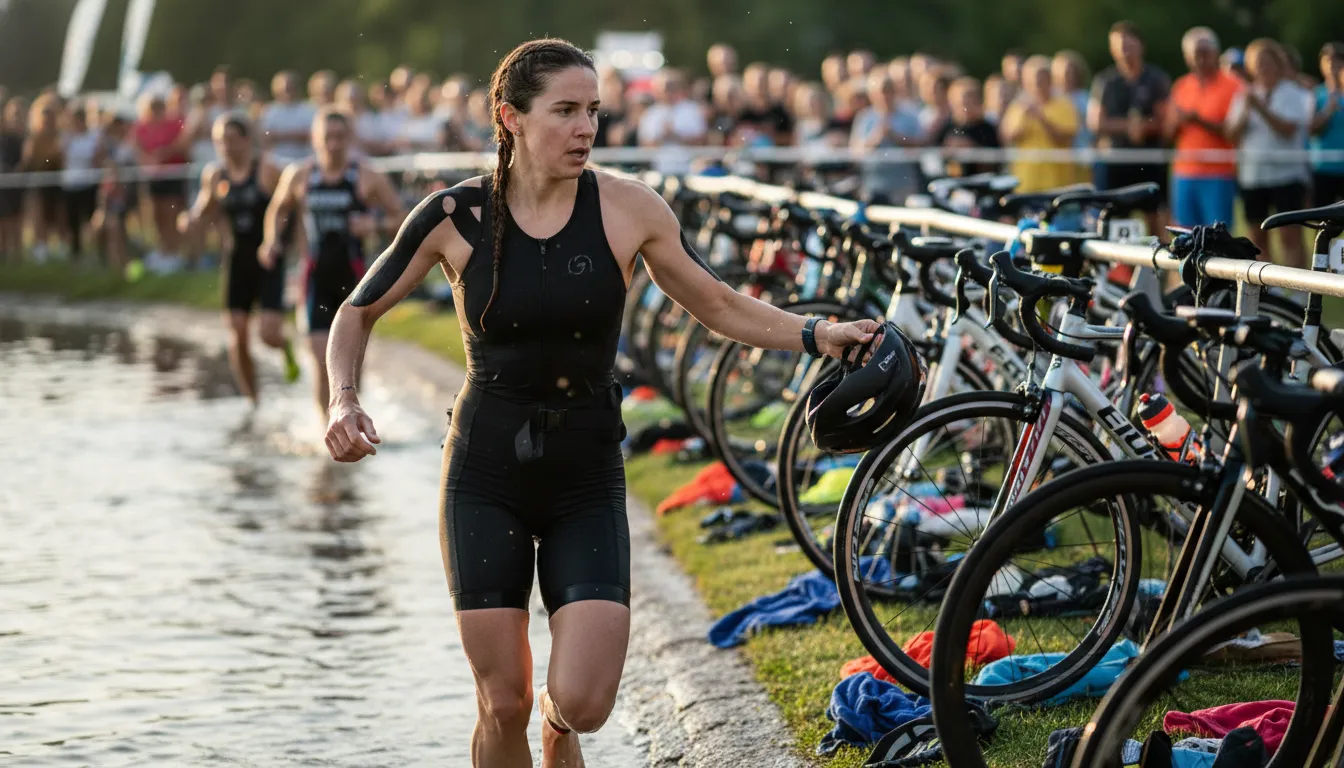
How tape supports the swim, bike, and run
One well-tested application can provide flexible support from the swim start through the bike and run, provided the tape is applied correctly and remains comfortable.
The main advantage for triathletes is continuity. The tape does not need to be packed into a transition bag for reapplication after every leg. Once the adhesive has set, it can remain in place through water, sweat, changing clothes, and repeated movement. Still, athletes should inspect the tape before each session and remove it if their skin becomes uncomfortable.
| Discipline | Common demand | Routine focus | Preparation tip |
|---|---|---|---|
| Swim | Water exposure and shoulder movement | Secure, smooth application | Apply at least one hour before entering water |
| Bike | Repeated leg motion and long seated periods | Comfort through a full pedal stroke | Test under race apparel during a long ride |
| Run | Tired legs after the bike | Flexible calf, shin, or joint support | Confirm placement during brick workouts |
Swim durability
For the swim, clean application matters as much as the tape itself. Oils, lotions, damp skin, loose corners, and a rushed start can shorten wear. Round each strip's corners, set the anchors with no stretch, rub the finished application to warm the adhesive, and wait at least 60 minutes before entering the pool or open water.
Athletes should test the tape beneath the exact wetsuit or swimskin planned for the event. The edge of a suit can catch a poorly placed strip even if the adhesive holds well in water. After swimming, pat the area dry rather than rubbing it with a towel.
Bike and run comfort
On the bike, check that the tape remains comfortable through the full riding position and pedal stroke. A strip that feels fine while standing may feel different after an hour in the saddle. On the run, check whether the same application moves cleanly with tired legs and does not catch on socks, shorts, or compression gear.
Brick sessions provide the most useful test because they reveal how an application behaves through discipline changes. Keep notes on placement, strip length, tension, weather, and wear. Those details turn a general product into a repeatable personal setup.
How should triathletes apply kinesiology tape?
Triathletes should apply tape to clean, dry skin with unstretched anchors, controlled tension through the middle, rounded corners, and at least 60 minutes of set time before water or sweat.
Start by choosing the placement based on a training need, not a race-day guess. If needed, trim hair so the strip can sit flat. Clean away oil, lotion, sunscreen, and moisture. Cut the required strip length, round the corners, and avoid touching the adhesive more than necessary.
Use a simple application sequence
- Clean and fully dry the selected area.
- Cut the strip to length and round every corner.
- Place the first anchor with no stretch.
- Apply light to moderate tension only through the middle section.
- Place the final anchor with no stretch.
- Rub the strip gently to warm and set the adhesive.
- Wait at least 60 minutes before swimming or heavy sweating.
More tension is not automatically better. Excess stretch can make the application uncomfortable and shorten wear. Smooth the strip as it is applied so folds and air pockets do not create weak points. Follow established placement guidance or consult a qualified professional when testing a new area.
Inspect and remove with care
Before every workout, check that the tape remains smooth and comfortable. Small lifted corners can be trimmed with clean scissors rather than pulled. After swimming, pat the tape dry and let it air out. Avoid applying oils or sunscreen directly along the edges.
To remove the tape, work slowly in the direction of hair growth rather than pulling it away quickly. Stop wearing it if the area becomes uncomfortable. Although Canna Tape Sport tape is designed for up to five days of wear, an athlete's actual wear time depends on placement, skin, water exposure, climate, and activity.
Explore 10mg CBD kinesiology tape for a tested training routine.
When should you apply tape during race week?
Apply tape during race week only after rehearsing the same placement in training; many athletes choose 24 to 48 hours before an event so they can confirm adhesion and comfort.
The best schedule is the one that has already worked during a comparable training block. Test the application during a long swim, a long ride, a long run, and at least one brick workout. This gives enough information to decide whether to use a fresh strip shortly before the event or an application that has already been worn for a day.
Build a race-week schedule
- Several weeks before: test possible placements and tension during normal training.
- One to two weeks before: complete a full dress rehearsal with planned apparel and transitions.
- 24 to 48 hours before: apply the rehearsed setup if that timing worked during testing.
- Race morning: inspect edges and comfort; avoid changing the plan without a clear reason.
Applying tape early gives the adhesive time to settle and lets the athlete notice any comfort issue before arriving at the start. It also removes one step from a busy race morning. However, a strip that has lifted, become uncomfortable, or no longer matches the athlete's plan should not be kept merely because it can last up to five days.
Keep race morning simple
Race morning should focus on known gear, fuel, timing, and transitions. If the tape is already in place, inspect the edges and confirm that it feels the same as it did in training. If a fresh application is required, apply it early to clean, dry skin and keep sunscreen away from the adhesive until it has set.
Pack spare strips and small scissors in a gear bag, but do not assume there will be time or a suitable clean, dry area for a new application during transition. The goal is to arrive with a setup that has already earned trust through rehearsal.
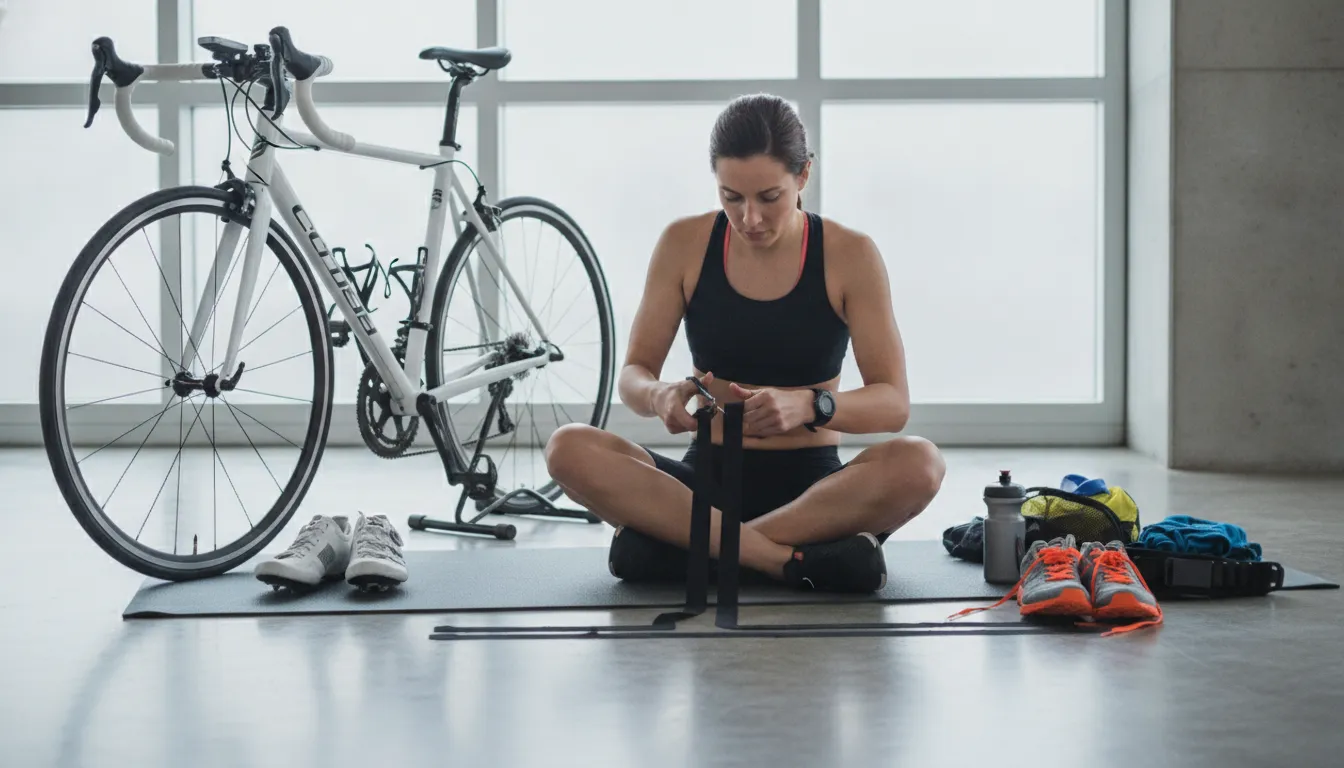
Will CBD kinesiology tape stay on through a swim?
Yes, Canna Tape Sport CBD kinesiology tape is water-resistant and designed to stay on through swimming, but correct skin preparation, set time, placement, and after-swim care affect actual wear.
Water resistance is especially valuable for triathletes because the swim happens before the bike and run. A secure application can remain in place as an athlete exits the water, changes equipment, and continues onto dry land. Yet water resistance does not make preparation optional. Damp skin, lotion, loose edges, or friction from a wetsuit can reduce wear.
Test the complete swim setup
Do not test the tape only during an easy pool session if the event requires open water and a wetsuit. Use the planned goggles, swimskin or wetsuit, timing strap, and transition clothing. Pay attention to any edge that catches while dressing or undressing. Adjust the placement during training rather than on event morning.
Salt water, chlorine, temperature, humidity, and individual skin all affect wear differently. After each swim test, note whether corners stayed flat, whether the strip remained comfortable, and how it performed on the following bike or run. That evidence is more useful than relying only on the maximum wear rating.
Build a repeatable tape routine before race day
A repeatable routine records placement, timing, tension, apparel, and wear so an athlete can recreate a comfortable setup without guessing on race day.
Start with one goal and one placement. Test it during a shorter workout, then progress to longer discipline-specific sessions and brick workouts. Photograph the finished application and write down the strip length and approximate tension. A simple record makes it easier to repeat what worked and avoid what did not.
Use a training log
A tape log can sit beside notes about fuel, hydration, equipment, and pacing. Record the date, discipline, session duration, placement, set time, conditions, and how the tape looked afterward. Include whether the tape was worn beneath a wetsuit or tight apparel. After several tests, patterns should become clear.
Consistency also helps athletes avoid overcomplicating their kit. One proven application is generally more useful than several new placements added just before an event. If the tape does not stay comfortable through the planned activity, revise the setup during training or leave it out of the event plan.
Pack useful spares
Keep spare strips, clean scissors, and application instructions with race-week gear. Store strips somewhere dry and protected. Spares are helpful before an event or during travel, but the best result still comes from applying tape carefully to clean, dry skin with enough time for the adhesive to set.
Triathletes looking for discipline-specific training support can also review Canna Tape Sport's swim collection. Use product information as a starting point, then build a routine around personal training evidence.
Shop CBD kinesiology tape and rehearse your race-week setup before the start line.
What makes CBD kinesiology tape different?
CBD kinesiology tape combines the flexible physical support of athletic tape with hemp-derived CBD in a wearable strip designed for active use.
Canna Tape Sport is a U.S.-based athletic recovery brand and a first mover in CBD-infused kinesiology tape. Each strip contains 10mg of hemp-derived CBD and uses a latex-free, hypoallergenic adhesive. The tape is available in black and blue, resists water and sweat, and is designed for up to five days of wear.
The product is non-intoxicating. Its value for triathletes is not complexity, but convenience: the tape can fit into a familiar swim-bike-run routine without requiring a new step at every transition. Athletes should use verified product details, review current competition rules, and make personal decisions based on rehearsed use.
Learn how CBD-infused athletic tape fits an active recovery routine.
Frequently Asked Questions
These concise answers cover common questions triathletes ask before adding CBD kinesiology tape to training or race-week preparation.
Can triathletes use CBD kinesiology tape during swimming and cycling?
Yes. Canna Tape Sport CBD kinesiology tape is water-resistant and sweat-resistant, so athletes can test it during swim, bike, and brick sessions. Apply it to clean, dry skin at least one hour before activity and confirm that it stays comfortable through each discipline.
How long does CBD kinesiology tape stay on the skin?
Canna Tape Sport tape is designed for wear of up to five days. Actual wear varies with placement, skin preparation, water exposure, activity, and care. Trim lifted edges and remove the tape if the skin becomes uncomfortable.
Is CBD kinesiology tape allowed for competitive athletes?
Athletes should review the current rules for their event and governing body before using any CBD product. Canna Tape Sport uses hemp-derived CBD and provides a Certificate of Analysis so athletes can review product details before making a decision.
How does CBD kinesiology tape support a triathlon recovery routine?
It combines flexible kinesiology tape support with 10mg of hemp-derived CBD per strip in a wearable format. Triathletes can include it in a rehearsed routine across swim, bike, run, travel, and post-workout periods.
Ready to build your triathlon tape routine?
Start during training, document what works, and keep event-day preparation simple. Canna Tape Sport CBD kinesiology tape gives triathletes a water-resistant, sweat-resistant support option built for active use across all three disciplines.