Shoulder soreness can build quietly when throwing, swimming, serving, pressing, or reaching overhead repeatedly. A thoughtful taping routine can add lightweight support while you keep working on mobility, strength, and recovery habits.
For athletes, kinesiology tape for shoulder support can help reinforce body awareness and support comfortable movement without locking the shoulder in place. CannaTape Sport CBD-infused tape adds 10mg of hemp-derived CBD per strip to a latex-free, hypoallergenic athletic tape designed for active recovery. Apply it to clean, dry skin, use gentle tension, and treat the tape as one part of a broader training routine.
Shop CBD Kinesiology Tape for Shoulder Support
The right application depends on what your shoulder is doing during training. Start by looking at the movement patterns that create extra demand, then match the placement and tension to the deltoid and rotator cuff areas.
Why Athletes Get Shoulder Soreness
The shoulder is built for mobility, which also means it must coordinate many muscles through demanding ranges of motion. Throwing, swimming, tennis serves, and overhead pressing all place repeated demands on the shoulder. When training volume rises faster than recovery, everyday soreness can become a signal to adjust workload, technique, or recovery habits.
Overhead movement adds repeated muscle demand
During overhead sports and lifts, the deltoid helps raise and control the arm. The rotator cuff muscles and tendons contribute to stability and rotation as the arm moves. Repeating these actions across practice, competition, and strength sessions can leave the shoulder feeling tired and less comfortable, especially when rest between sessions is limited.
Swimming strokes and tennis serves combine repetition with speed. Throwing adds acceleration and deceleration. An overhead press places a different kind of demand on the same general area, particularly when an athlete increases load or repeats high-volume sets. The specific movement varies, but the recovery need is similar: support the shoulder while maintaining a balanced training plan.
Mobility work and strengthening can support shoulder health alongside recovery tools. A consistent routine may include controlled range-of-motion exercises, gradual strength progressions, and adequate recovery between demanding sessions. Taping can fit into that routine by providing a light physical cue around the working area. It may also remind an athlete to maintain better posture and shoulder positioning during exercise, rather than letting fatigue change movement quality.
For athletes exploring Black CannaTape Sport kinesiology tape, the goal is supportive wear during training and recovery, not rigid restriction. Use it as one part of a thoughtful approach to shoulder support, alongside sensible programming and attention to how the body feels from session to session.
How Kinesiology Tape for Shoulder Support Works
Kinesiology tape is designed to support movement, not lock the shoulder in place. Its flexible material follows the body's motion while adding light mechanical feedback across the taped area. That combination can help athletes stay aware of shoulder position during training, warmups, and active recovery.
Mechanical support and proprioception
One useful effect is proprioception, or joint position sense. The tape's contact with the skin gives the athlete an additional movement cue, which may make it easier to notice shoulder alignment while reaching, lifting, swimming, or serving. Research on kinesiology taping has examined its potential to improve joint position sense, a consideration for athletes managing shoulder-related soreness and rebuilding consistent movement patterns. Read the research on joint position sense.

Application also matters. A shoulder-focused taping pattern can influence scapular movement and provide a gentle reminder to maintain useful positioning during exercise. A published case report examined upward scapular taping and its potential relationship to shoulder movement control. Offering context for why direction and placement should match the movement goal rather than being treated as a one-size-fits-all method. Review the scapular taping case report.
Unlike rigid athletic tape, kinesiology tape is intended to provide support while allowing natural range of motion. That makes it practical for athletes who need movement feedback without turning a recovery session into an immobilization strategy. A systematic review also found that taping used alongside conservative care may benefit people with shoulder issues. So it works best as one part of a broader plan rather than as a standalone solution. See the systematic review on shoulder taping.
For athletes who want to add this approach to a recovery routine, CannaTape Sport Blue Tape is made for active use. The tape can be worn for up to five days, including during exercise and showers, when applied according to the product guidance. It should feel supportive and flexible, never excessively tight or restrictive.
Related products

High-potency, targeted application designed to deliver fast, effective support exactly where it’s needed most
View product
Elevate your recovery strategy and maintain peak performance with the CannaTape Sport Recovery Kit.
View product
Elevate your recovery strategy and maintain peak performance with the CannaTape Sport Recovery Kit.
View productHow to Apply Kinesiology Tape to the Deltoid
The deltoid is a primary shoulder movement muscle, so taping it can provide useful support during repetitive overhead activity. A careful application should feel like a light, supportive second skin, not a rigid layer that limits your natural movement.
Deltoid taping steps
- Prepare the skin. Start with clean, dry skin so the adhesive can bond properly. Remove lotion, oil, sweat, and sunscreen from the application area. Do not apply tape over broken skin, open wounds, or an active rash. If you have sensitive skin, test a small piece first and monitor the area while wearing it.
- Cut and round the strips. Measure the tape from the top of the shoulder toward the outer upper arm, then cut the required strips. Round the corners with scissors. Rounded edges are less likely to catch on clothing, which can help the application stay comfortable during training and everyday movement.
- Position the shoulder. Relax the arm at your side or place it slightly behind you, depending on the direction of the strip and the guidance you are following. Keep the shoulder relaxed rather than shrugging. This gives you a consistent surface for the tape and makes it easier to assess how the application feels.
- Anchor the first end. Place the starting end at the top of the shoulder without stretch. Press the anchor down securely, then guide the remaining strip over the rounded deltoid muscle belly toward the outer upper arm.
- Use light to moderate tension. Apply the tape over the deltoid with light to moderate tension, not maximum stretch. Avoid overstretching the material. The goal is a supportive feel that complements movement, not tightness, pulling, tingling, or restriction. Smooth the final end down without stretch.
- Activate the adhesive. Rub over the entire strip with the palm of your hand for several seconds. Gentle friction activates the heat-sensitive adhesive and helps secure the bond. Check the edges and press down any areas that have lifted before beginning activity.
- Check the finish. Move the arm through a comfortable range and notice the overall feel. Properly applied tape should support the shoulder without restricting natural motion. Remove it if you notice unusual irritation or discomfort, and reassess the tension and placement before trying again.
For a ready-to-use option, explore CBD-infused kinesiology tape as part of an active recovery routine.
Taping the Rotator Cuff Area for Stability
The rotator cuff is a group of muscles and tendons that helps stabilize the shoulder and guide rotation. For athletes who repeatedly lift, throw, swim, serve, or press overhead, targeted taping can add tactile feedback while allowing natural movement. A rotator cuff application is best viewed as a training and recovery support tool, not a replacement for sound technique, mobility work, or coaching.
Use multi-directional strips to complement shoulder positioning
Because the cuff surrounds the shoulder rather than sitting in one straight line, protocols commonly use strips in more than one direction. One strip can follow the back or side of the shoulder, while another crosses the upper shoulder area to provide a gentle reminder of positioning. The goal is broad, comfortable support around the shoulder complex, not rigid immobilization. Research on scapula-upward taping also suggests that strategic application may support scapular movement and shoulder control. Read the research on scapular support for additional context.
Picture a volleyball player preparing for a weekend tournament. After a thorough warm-up, they apply the strips before serving practice, checking that the tape reinforces a balanced shoulder position without limiting the arm's overhead path. A swimmer or tennis player can use the same principle during a high-volume training block: apply with a clear objective. Then pay attention to movement quality rather than relying on the tape to solve a technical issue.
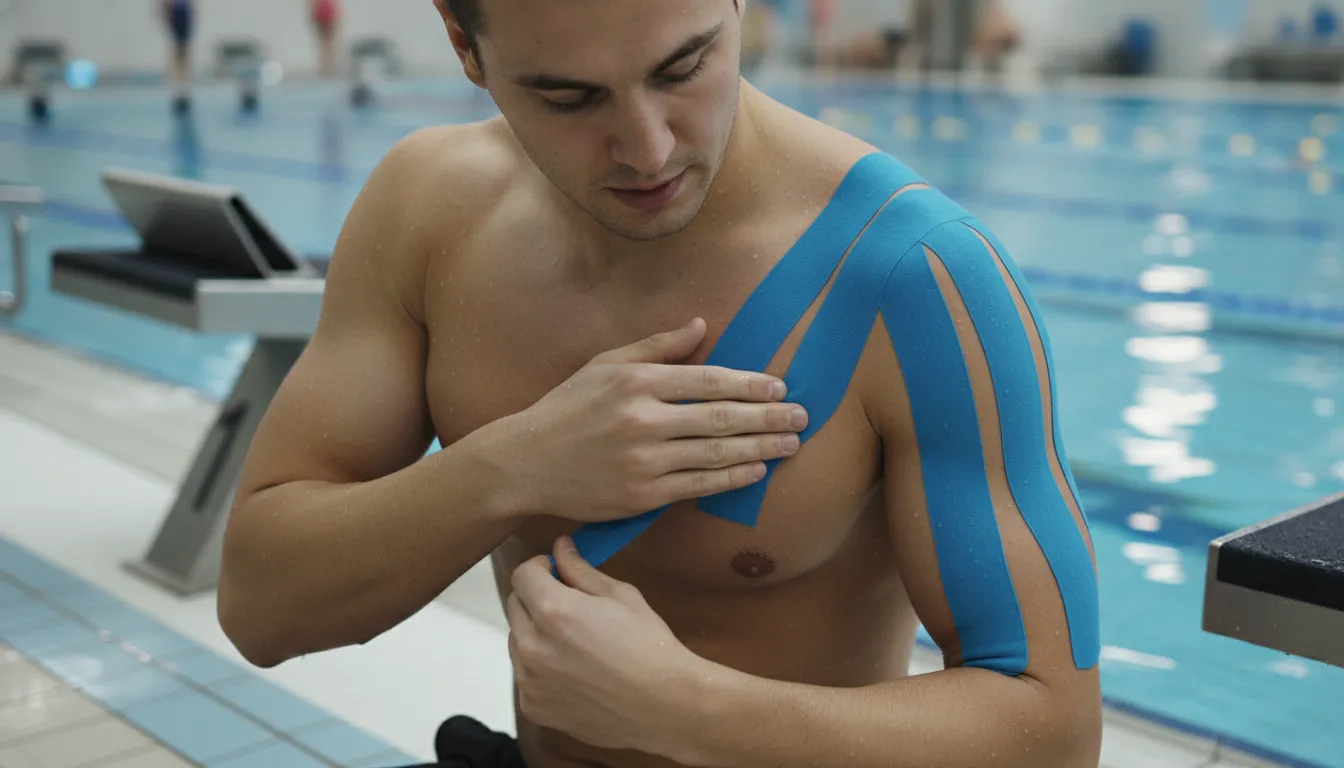
Start with clean, dry skin so the adhesive can bond properly. Apply the strips with only the tension needed for light support, and avoid overstretching. The tape should feel comfortable and nonrestrictive. After placement, gently rub the surface to activate the heat-sensitive adhesive. CannaTape Sport's Blue CBD kinesiology tape is one option for athletes building this type of shoulder-support routine.
Do not place tape over broken skin, open areas, or an active rash. During the first few hours, monitor the skin for redness or sensitivity. Remove the tape if irritation develops, and use an oil-based product to help loosen adhesive when needed. Persistent shoulder discomfort deserves evaluation by a qualified professional before you return to demanding overhead training.
CBD Tape vs. Standard Kinesiology Tape for the Shoulder
Both standard kinesiology tape and CannaTape Sport are designed to provide flexible, mechanical support while allowing the shoulder to move through its natural range. The difference is that CannaTape Sport adds a topical CBD option to the familiar taping format. Making it a practical choice for athletes who want to build recovery support into the same routine they use for training.
| Feature | CannaTape Sport CBD-infused tape | Standard kinesiology tape |
|---|---|---|
| Support material | Flexible kinesiology tape designed for athletic support, with topical CBD added to the format. | Flexible kinesiology tape focused on mechanical support and movement feedback. |
| CBD content | 10mg of CBD per strip. | Does not include CBD unless the product is specifically formulated with it. |
| Wear time | Can be worn for up to 5 days when applied correctly. | Wear time varies by product, application, activity, and skin response. |
| Adhesive | Hypoallergenic and latex-free, with moisture-resistant adhesion for sweat and water. | Adhesive materials and moisture resistance vary by brand. |
| Intoxicating effects | Uses hemp-derived CBD and is non-intoxicating. | No CBD-related effects because CBD is not part of the standard format. |
| Color options | Available in black and blue. | Color options depend on the manufacturer. |
Choosing the right format for your recovery routine
Standard kinesiology tape can be a straightforward option when your priority is flexible shoulder support, movement awareness, and a secure layer during training. CannaTape Sport is differentiated for athletes who also want a non-intoxicating CBD element in their post-workout or active recovery routine. The tape does not replace mobility work, strengthening, or sound application technique. It simply combines mechanical support with a CBD recovery option in one wearable product.
For a closer look at how shoulder tape compares with another topical format, read CBD patch vs. tape for the shoulder. If the combined format fits your routine, explore CBD-infused kinesiology tape in black or blue.
Get the Tape That Supports Your Next Workout.
Build a Shoulder Recovery Routine Beyond Taping
Taping can be a useful part of an active recovery plan, but it should support your training rather than replace it. A balanced routine combines movement, strength, rest, and practical recovery tools so your shoulders are prepared for the demands of swimming, lifting, throwing, serving, or other overhead work.
Pair mobility and strength with planned recovery
Start with mobility work that matches your training. Gentle shoulder circles, controlled arm raises, and comfortable range-of-motion drills can help you prepare for a session or transition into a cooldown. Add strengthening exercises that build control around the shoulder and upper back, using a load and range that fit your current training level. The goal is steady support and quality movement, not forcing a stretch or chasing fatigue.
Recovery days also belong in the training cycle. Schedule lighter sessions or deload periods when training volume has been high, and use those days for easy movement, technique work, and rest. A consistent recovery routine can help athletes maintain shoulder readiness during demanding training blocks. CannaTape Sport describes mobility work, strengthening, and recovery support tools as complementary parts of shoulder support, rather than standalone solutions. Review the brand's shoulder recovery guidance as you build a routine that fits your sport.
Apply tape when you want lightweight support and movement feedback during activity or recovery. It should feel comfortable and nonrestrictive. If the tape causes notable discomfort or skin irritation, remove it and reassess the application. Taping is an aid for recovery and movement, not a substitute for sound programming, coaching, or a qualified evaluation.
Use topical recovery products thoughtfully
Some athletes combine CBD-infused kinesiology tape with a topical CBD roll-on or lotion as part of a broader post-workout routine. CannaTape Sport positions these products for proactive muscle and joint support, and its hemp-derived CBD products are non-intoxicating. For a targeted topical option, explore the ProRecovery Precision Roll-On 2000. Follow each product's directions, and avoid layering products under tape if doing so could affect adhesion or irritate your skin.
If shoulder soreness persists, repeatedly returns, or limits normal training, consult a qualified medical professional for an evaluation. Persistent symptoms deserve more than another tape application. A professional can help determine whether your training plan, movement pattern, or recovery approach needs adjustment.
Start Your Shoulder Recovery Routine Now
Frequently Asked Questions
Can I apply shoulder tape by myself?
Yes. Self-application is practical when you can reach the shoulder comfortably and see the placement in a mirror. Apply the strips to clean, dry skin, follow the deltoid or rotator cuff pattern from the guide, and rub the tape gently to activate the adhesive. Ask a training partner or qualified professional for help if positioning is difficult.
How long can I wear kinesiology tape on my shoulder?
CannaTape Sport tape can be worn for up to five days, including during showers or exercise, when it remains comfortable and well adhered. Follow the product guidance and remove it sooner if you notice persistent redness, itching, or other skin irritation.
Should shoulder tape feel tight or restrictive?
No. Properly applied kinesiology tape should feel like light, flexible support rather than a rigid brace. You should be able to move through your natural range of motion. Remove or reapply the tape if it pulls, bunches, causes numbness, or interferes with comfortable movement.
Is taping enough for a complete shoulder recovery routine?
Taping works best as one part of a broader routine that may include mobility work, progressive strengthening, technique adjustments, and rest between demanding sessions. If shoulder soreness persists or keeps returning, consult a qualified medical professional for an evaluation before continuing intense training.
Is CBD-infused shoulder tape intoxicating?
No. CannaTape Sport uses hemp-derived CBD and describes its topical products as non-intoxicating. The tape is designed for external athletic support and active recovery, not for psychoactive effects.
Ready to Support Your Shoulder Recovery Routine?
Consistent taping can complement your warm-up, training, and active recovery habits by adding focused support during movement. Shop CannaTape Sport CBD-infused kinesiology tape as a practical addition to your shoulder support routine.