A long hike asks for steady movement across climbs, descents, roots, rocks, and changing weather. CBD kinesiology tape for hiking combines flexible athletic support with hemp-derived CBD in a compact format that fits easily into a trail kit. CannaTape Sport tape is water and sweat resistant, uses a hypoallergenic latex-free adhesive, and can stay on for up to five days. Each pre-cut strip contains 10mg of CBD, making it a practical option for active adults who want targeted support before, during, and after trail time.
Shop CannaTape Sport CBD + Kinesiology Tape and prepare your trail kit before the next hike.
The best results begin before the trailhead. Correct skin preparation, careful placement, smart moisture management, and regular tape checks all matter. This guide explains how to build those steps into a reliable hiking and recovery routine.
Start with a short practice outing several days before a longer hike. That trial gives you time to assess placement, learn how the tape works with your clothing, and refine your routine. It also keeps the main trip focused on the trail rather than unfamiliar gear.
Why use CBD kinesiology tape for hiking?
CBD kinesiology tape gives hikers targeted, flexible support in a lightweight format that moves with the body and stays useful through sweat, light rain, and extended activity.
Unlike a rigid support, kinesiology tape stretches as you move. That flexibility makes it well suited to hiking, where stride length and body position constantly change. A flat trail, steep ascent, rocky traverse, and long descent each place different demands on a hiker. Tape can become one part of a broader trail plan. Suitable footwear, technical socks, hydration, fuel, pacing, and rest breaks complete the system.
Plan with the whole day in mind. Consider elevation gain, expected weather, pack weight, and the distance back to the trailhead. A well-tested tape application is most useful when it supports an already thoughtful approach to movement and gear.
CannaTape Sport tape is made from 97% cotton and 3% nylon with 180% single-direction stretch. Its pre-cut strips have rounded corners, which reduce loose edges that can catch on socks or clothing. A roll contains 20 strips, enough for several applications depending on placement. The strips take little pack space, so hikers can carry extras without adding meaningful weight.
Match support to the route
Think about the terrain before deciding where tape fits into your setup. Long descents may call for a different application than a rolling route. If you plan to tape around the knee area, review CannaTape Sport's knee application guideline before your trip. Apply tape at home first, then test it during a short walk rather than experimenting at the trailhead.
Tape should feel secure without limiting normal movement. If it feels uncomfortable, remove it and reassess the placement. Hikers with sensitive skin should test a small piece before committing to an all-day or multi-day application.
How should you prepare and apply tape before a hike?
Apply tape to clean, fully dry skin at least 30 minutes before activity, keep oils and lotions away from the area, and rub the tape after placement to activate the adhesive.
Preparation is the biggest factor a hiker can control. Sweat, sunscreen, lotion, dirt, and natural skin oils can weaken adhesion. Wash the intended area, dry it completely, and trim excessive hair if needed. Do not apply lotion underneath the strip. If sunscreen is necessary, keep it away from the taped area and wash your hands before handling the adhesive.
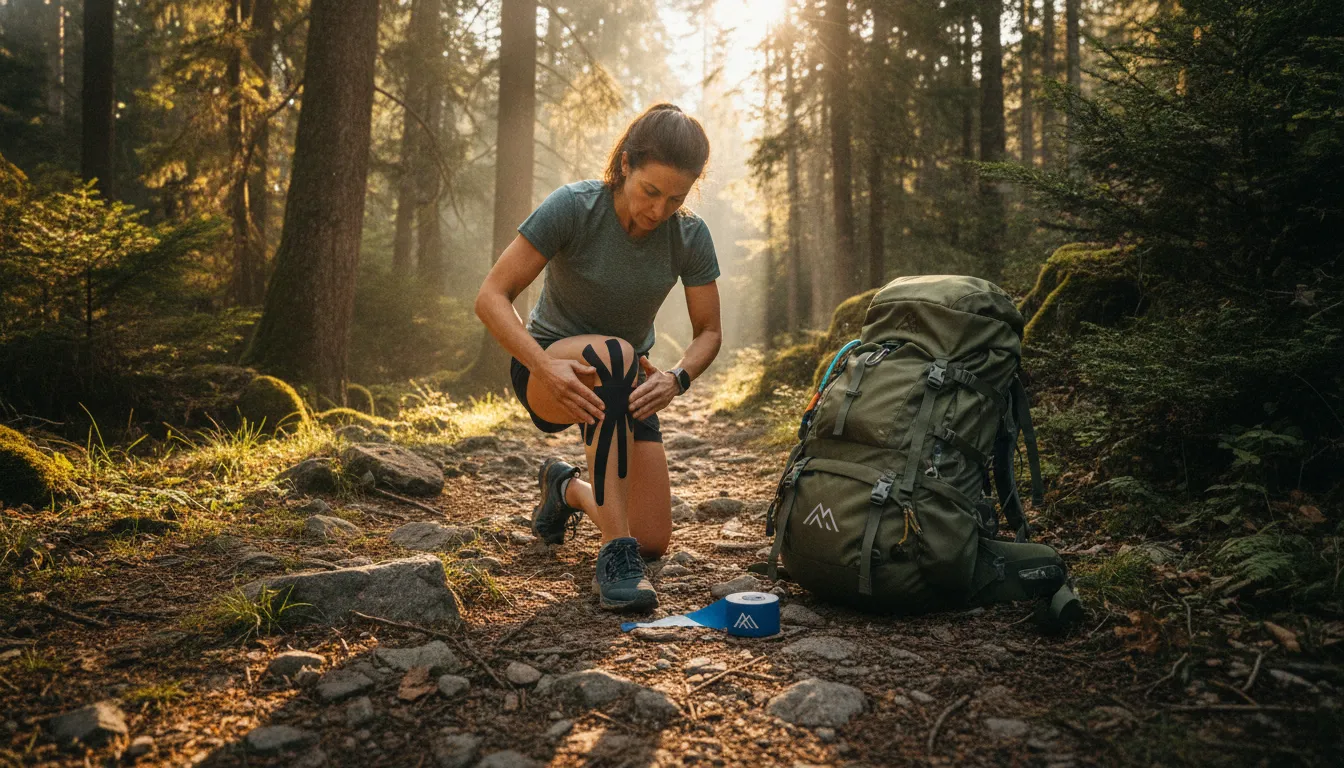
Use a simple application sequence
- Plan the placement. Review the route and choose an application appropriate for the activity.
- Prepare the skin. Clean, dry, and remove anything that could interfere with adhesion.
- Handle the adhesive carefully. Touch as little of the sticky surface as possible.
- Place the strip smoothly. Avoid wrinkles, especially where a backpack strap, sock cuff, or clothing seam may rub.
- Activate and test. Rub the strip to warm the heat-activated adhesive, then walk and move through a comfortable range.
Give the adhesive time to settle before sweating heavily. Packing up gear, checking the route, and driving to the trailhead can provide that buffer. When possible, apply tape before putting on tight layers that might catch an edge.
For more product background before choosing an application, read the guide to CBD-infused kinesiology tape benefits.
What happens when the trail gets wet or sweaty?
CannaTape Sport tape is water and sweat resistant, but good placement and sensible checks help it remain secure when a hike includes heat, rain, humidity, or stream crossings.
Moisture is normal outdoors. The goal is not to keep tape perfectly dry. Instead, start with a strong bond and avoid habits that loosen it. After rain or a stream crossing, gently blot the tape with a clean cloth rather than rubbing it. Allow it to air dry when conditions permit. Do not point direct high heat at the strip.
Check edges during natural breaks. A slightly raised corner may be manageable, while a large loose section can catch on clothing and continue peeling. Carry a spare strip in a small sealed bag so it stays clean and dry. If a replacement is needed, remove the old strip carefully, clean and fully dry the area, then apply a fresh piece only if the skin looks and feels normal.
Build tape checks into trail habits
- Check the tape when adjusting socks, footwear, or layers.
- Blot rather than rub after exposure to water.
- Keep spare strips protected from dust and moisture.
- Avoid pulling on a loose corner while walking.
- Remove tape if the skin becomes uncomfortable.
Moisture resistance is useful, but it does not replace route planning or sound gear choices. Treat tape as one component of the system. A rain shell, dry socks, enough water, and suitable footwear still do the heavy lifting in changing conditions.
How do you manage extended wear on multi-day hikes?
CannaTape Sport tape can be worn for up to five days, making it suitable for a multi-day hiking routine when the application remains secure and the skin underneath stays comfortable.
Extended wear can reduce the need to reapply tape each morning, but it should never become a set-and-forget decision. Look at the application at the start and end of each day. Check after water exposure and whenever you change clothes. Watch for major lifting, trapped debris, or discomfort. Remove the strip when it no longer feels right.
A pre-cut roll contains 20 rounded-corner strips and fits easily in a resupply bag or overnight pack. Store spare tape in its original packaging or another clean, sealed container. Keep it away from open sunscreen, damp clothing, and trail dust. A small dedicated pouch makes tape easy to find when daylight or weather changes.
Plan around the five-day maximum
"Up to five days" is a maximum, not a target every hiker must reach. Conditions, placement, clothing friction, and individual skin all affect wear time. A short day hike may call for removal after the outing, while a comfortable application may remain useful during a longer trip. Let the condition of the tape and skin guide the decision.
For verified product details, explore the CannaTape Sport product collection. Hikers who want to confirm CBD contents can also review the brand's Certificates of Analysis.
Add a roll of black CBD + kinesiology tape to your multi-day gear checklist.
Build a trail-ready tape kit
A useful trail tape kit is simple: pre-cut strips, a clean sealed pouch, a small cloth, and the application knowledge to use each strip with confidence.
A compact kit makes it easier to act deliberately instead of improvising. Keep spare strips flat and protected. Add a small clean cloth for blotting moisture and wiping dirt from your hands. Include any printed application reference you rely on, or save the relevant guide to your phone for offline access. Do the learning before the trip, since remote trails may have limited service.
| Trail scenario | Preparation focus | On-trail habit |
|---|---|---|
| Warm day hike | Clean, dry skin and early application | Check edges during water breaks |
| Wet route | Strong initial bond and protected spares | Blot after water exposure |
| Multi-day trip | Enough strips and a sealed storage pouch | Inspect tape and skin daily |
| Long descent | Practice the intended placement in advance | Recheck during gear adjustments |
Choose tape with verified features
CannaTape Sport CBD + Kinesiology Tape uses hemp-derived CBD and contains 10mg of CBD per strip. It is hypoallergenic, latex-free, water and sweat resistant, and designed for up to five days of wear. The product is also non-intoxicating, with non-detectable THC supported by third-party testing. These details help hikers make an informed decision without relying on vague claims.
Learn more about the U.S.-based athletic recovery brand on the About CannaTape Sport page.
How should tape fit into a post-hike recovery routine?
After a hike, inspect the tape and skin, remove the strip slowly when needed, rehydrate, refuel, and give the body time for active recovery before the next demanding route.
The finish line is part of the plan. Once boots come off, take a moment to assess the application. If the tape remains comfortable and secure, it may stay in place within the recommended wear window. If removal makes sense, go slowly. Support the skin with one hand and peel the strip back gradually rather than pulling it upward quickly.
Use a practical recovery checklist
- Cool down with easy movement after the hike.
- Drink water and eat according to the demands of the route.
- Inspect taped areas and remove strips slowly when appropriate.
- Air out and clean gear before the next outing.
- Review what worked so the next application is easier.
Hikers who prefer a bright color can also explore the blue CBD + kinesiology tape when building their trail kit. Keep different products separated during application so lotions or oils do not weaken tape adhesion.
Experience matters. Record the route, weather, application placement, and wear time after each outing. A few short notes can help you identify which setup works best for your pace, gear, and preferred terrain.
Frequently Asked Questions
How long can you wear CBD kinesiology tape while hiking?
CannaTape Sport CBD + Kinesiology Tape can be worn for up to five days. Actual wear time depends on placement, moisture, clothing friction, activity, and individual skin comfort. Inspect the tape and skin regularly, especially during multi-day trips.
Is CBD kinesiology tape water and sweat resistant?
Yes. CannaTape Sport tape is water and sweat resistant. Apply it to clean, dry skin before activity, give the adhesive time to settle, and gently blot the strip after exposure to water.
How much CBD is in each strip?
Each pre-cut CannaTape Sport strip contains 10mg of hemp-derived CBD. Product contents are supported by third-party testing, and Certificates of Analysis are available from the brand.
Should you apply tape at the trailhead?
Applying tape at home is usually more practical. It gives you access to clean, dry skin and allows time for the heat-activated adhesive to settle. Test the placement with normal movement before beginning the route.
Get ready for your next trail day
A reliable hiking routine begins with preparation. Test your application before a demanding route, keep spare strips clean, check the tape as conditions change, and make post-hike review part of the day. With those habits in place, CBD kinesiology tape for hiking can become a compact and practical addition to an active recovery toolkit.
Shop CannaTape Sport CBD + Kinesiology Tape for your next trail plan.