One round asks your shoulders, elbows, wrists, and hips to repeat demanding rotations. A smart support routine starts before the first tee and continues after the final putt.
Shop CannaTape Sport CBD + Kinesiology Tape before your next round to test your preferred support routine.
CBD kinesiology tape for golfers combines flexible athletic tape with CBD for targeted muscle and joint support before, during, or after a round. Applied to areas stressed by repeated swings, it can complement a proper warm-up and active recovery routine. Common placements include the shoulder, elbow, wrist, or calf. Research notes that kinesiology tape may support range of motion and proprioception, which helps explain its role in athletic movement. CannaTape Sport CBD + Kinesiology Tape contains 10mg CBD per strip, uses hypoallergenic latex-free adhesive, and can be worn for up to five days. Careful placement matters, so follow application guidance and stop use if the skin becomes uncomfortable. Used with sound movement habits, the tape adds a focused support option to a golfer's routine.
The key question is not whether tape replaces good habits, but how it can complement them without restricting your swing. CBD kinesiology tape for golfers: where it fits in your routine starts with timing, placement, and the movement demands of your game. Here's how.
CBD kinesiology tape for golfers: where it fits in your routine
Short answer: CBD kinesiology tape for golfers fits before, during, and after a round. Apply it before warm-up for targeted muscle or joint support. Keep it on through play if it feels secure and comfortable. After the round, it can remain part of an active recovery routine.
Before the first tee
Start by choosing the area that needs support during your swing or walk. Golfers often focus on the shoulder, elbow, wrist, knee, or foot. A review of kinesiology taping methods describes techniques for specific joints and notes possible support for athletic performance and range of motion. The full review is available through the National Library of Medicine.
Apply the tape before your warm-up rather than just before the first shot. This gives you time to check the placement through easy swings and normal movement. The tape should feel supportive without limiting your motion. If the placement feels wrong or your skin reacts, remove it.
CBD-infused tape combines the familiar form of athletic tape with CBD in each strip. For a closer look at the product category, read this guide to hemp-infused kinesiology tape guide. It explains how the tape fits into a broader performance and recovery routine.
Support through the round
During play, treat the tape as one part of your normal golf setup. It does not replace a sound warm-up, steady pacing, hydration, or good swing habits. Instead, it offers targeted support while you rotate, grip, walk, and repeat shots across the course.
Check the edges between holes if heat, sweat, or clothing causes them to lift. Avoid pulling at loose areas during a swing. If the tape stays secure and comfortable, you can keep it in place as you move from the range to the course.
A good placement should work with your movement, not distract from it. That makes pre-round testing useful. Try several easy practice swings, then build toward your usual speed. This simple check helps you judge whether the tape belongs in your routine that day.
Post-round active recovery
After the final hole, assess how the taped area feels during a cool-down walk and light mobility work. You may keep the tape on if it remains comfortable and secure. Remove it if the edges no longer hold, the placement limits movement, or your skin reacts.
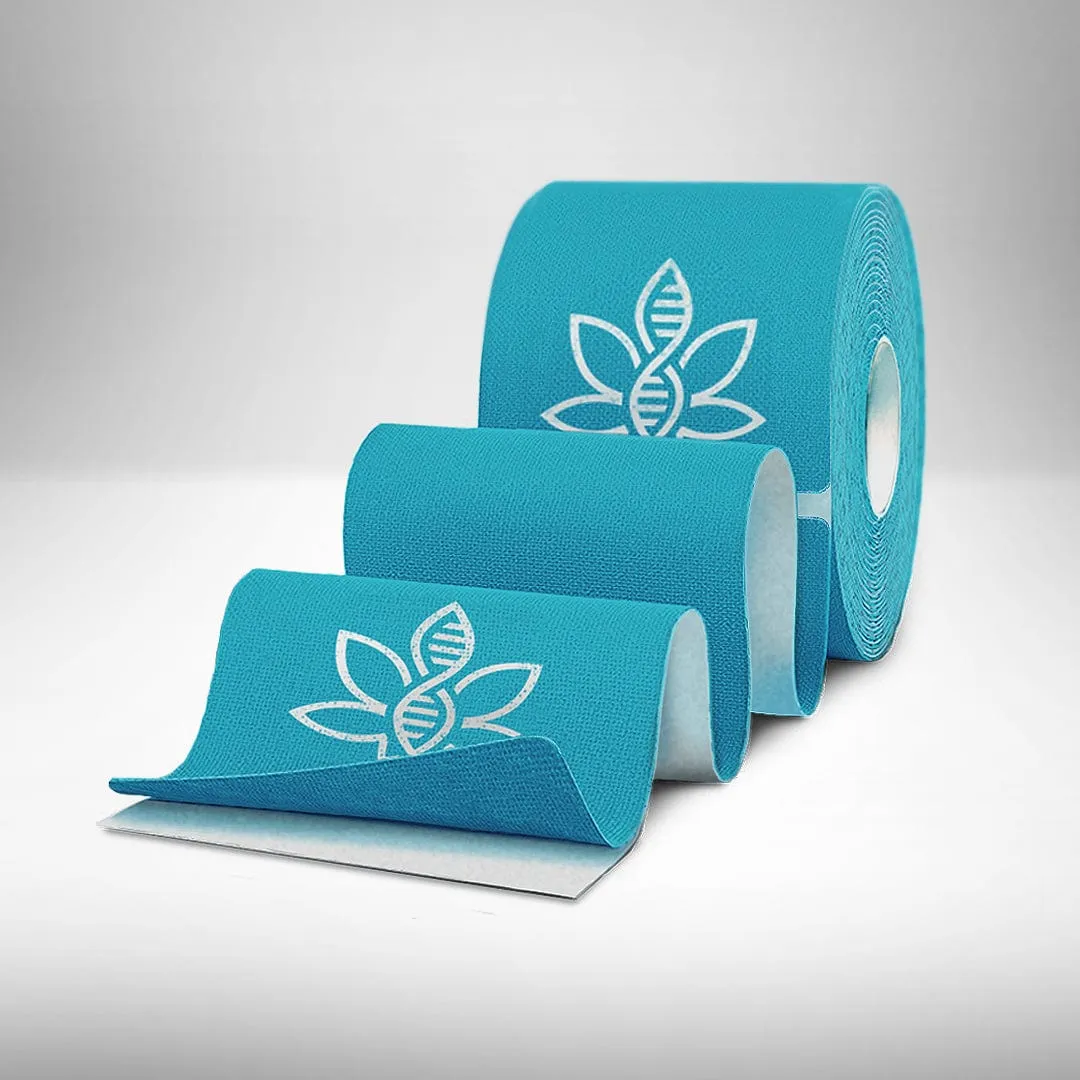
Post-round use is about supporting your active recovery routine, not making medical promises. Pair the tape with rest, food, fluids, and the recovery habits that already work for you. Review the product details when you are ready to see the blue CBD + kinesiology tape roll for your golf routine.
How golf movement patterns shape tape placement
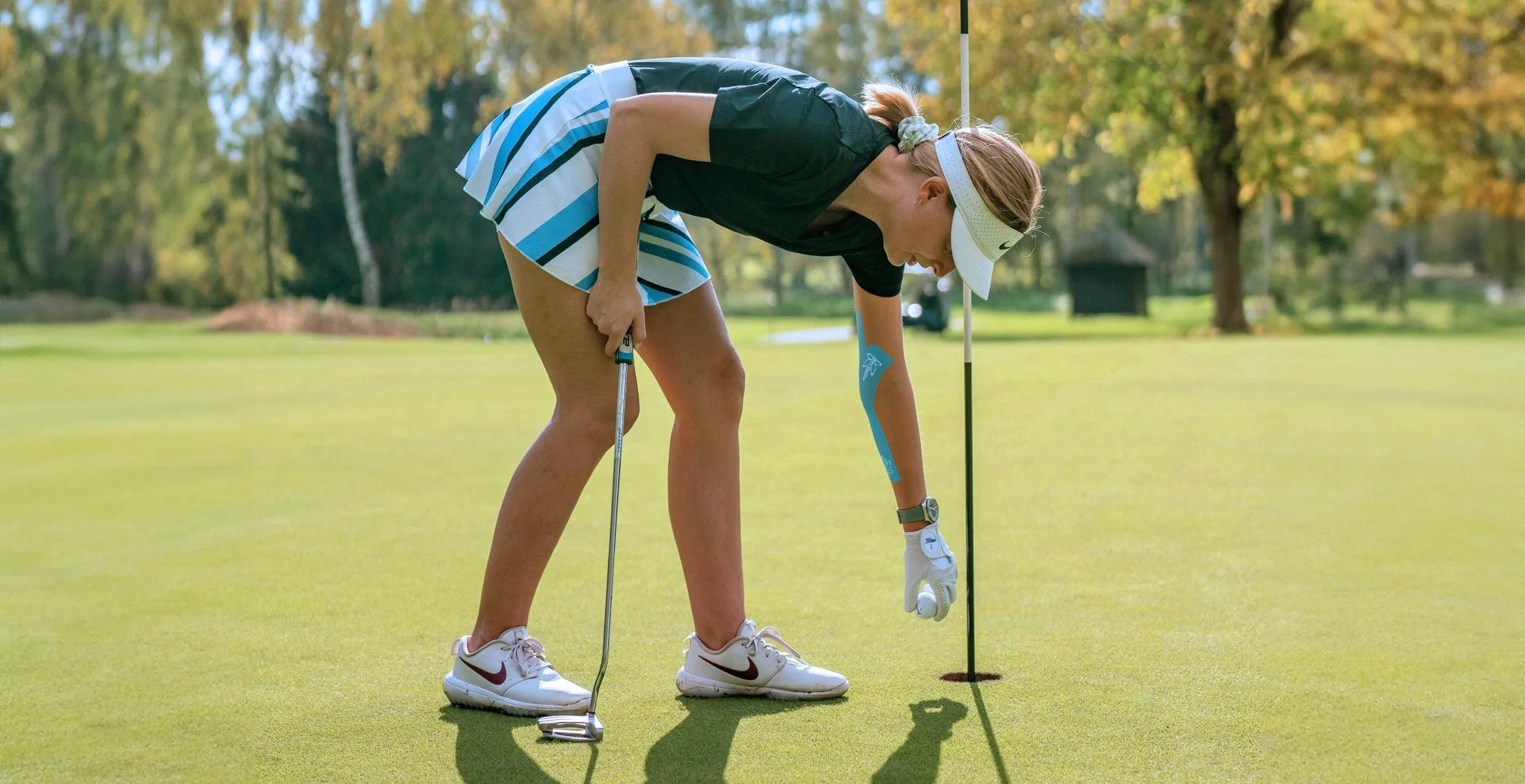
A golf swing is a linked motion, not just an arm movement. The feet set the base while the hips and torso turn. That turn guides the shoulders, arms, and club through the shot. Tape placement should reflect the area a golfer wants to support, rather than follow one standard pattern.
Golfers also repeat these motions during range sessions and across 18 holes. Some want muscle support during play, while others add tape to a post-round recovery routine. Research describes kinesiology tape as an athletic tool used to support joints, range of motion, and proprioception. The review of kinesiology taping techniques also shows why placement changes by body area.
Shoulder turn and lower back rotation
The shoulder turn helps move the club away from the ball and back through impact. A golfer seeking shoulder support may place tape around the muscles that guide this turn. Placement should allow a smooth setup, backswing, and finish. It should not pull the shoulder into an altered swing path.
Torso rotation also places steady work on the muscles around the lower back. Golfers may want support there after a long practice session or round. Tape should follow the chosen muscle area while leaving room for a full turn. Test the placement with slow practice swings before playing at normal speed.
The best location may also depend on a golfer's swing habits. A compact swing may load an area differently than a longer, faster turn. Start by noting where support feels most useful after practice. Then choose a placement that fits that movement and stays flat through rotation.
Elbow, forearm, and wrist control
The elbow and forearm help manage the club through the swing. They also work during grip changes, practice swings, chips, and bunker shots. A golfer seeking forearm support may apply tape along the active muscle area. Elbow placement may focus closer to the joint while still allowing easy bend and extension.
Wrist control affects how the club is set, released, and kept stable through the shot. Tape around this area should not limit grip comfort or normal wrist motion. Check the fit while holding a club, not just while the hand is open. Any edge that catches under a glove may need a new position.
- For shoulder support, test the tape through a full turn and finish.
- For forearm support, grip the club and make short swings before a full shot.
- For wrist support, check that the tape stays clear of the glove edge.
- For lower back support, test both rotation and the address position.
CBD kinesiology tape for golfers can fit into this movement-based approach. It pairs the familiar structure of athletic tape with a recovery-focused format. Golfers comparing placement options can also review this guide to learn how CBD-infused tape works. Use the chosen placement during practice, play, or a post-round routine. It should support movement, not force it.
How should golfers apply CBD kinesiology tape?
Plan the placement around your swing
Start by choosing one area that needs support during your swing or walk. Common placements for CBD kinesiology tape for golfers include the shoulder, elbow or forearm, wrist, knee, and ankle. Published research describes kinesiology tape techniques for specific joints and muscle groups. These methods can support athletic movement and body awareness.
Placement and strip shape vary by body area, so use the product directions as your main guide. If you are new to taping, ask a qualified athletic trainer or physical therapist to show you a suitable pattern. A trained professional can also help you avoid excess tension around a moving joint.
A six-step application routine
Choose the target area. Think about where you want added support during the golf swing or while walking the course. For shoulder support, plan a strip along the shoulder muscle rather than across the joint crease.
Prepare clean, dry skin. Wash away lotion, sunscreen, sweat, and oil, then dry the area fully. Trim excess hair if needed so the adhesive can sit flat and removal feels more comfortable.
Measure and round the strip. Hold the tape against the area before removing its backing. Cut the needed length, then round every corner with scissors. Rounded corners are less likely to catch on a shirt sleeve, glove, sock, or golf shoe.
Set the first anchor. Tear the backing near one end and place the anchor with no stretch. For an elbow or forearm, keep the arm in a relaxed, slightly bent position. For a wrist, avoid placing tape across the palm or where it could affect grip.
Lay the tape with light tension. Peel the backing away in stages while smoothing the strip over the target area. Do not pull the tape to its limit. Keep the final anchor free of stretch, and avoid wrinkles that may rub during play.
Check comfort through golf motions. Rub the tape gently to set the adhesive, then make a few slow practice swings. Bend the taped knee or ankle and walk several steps. The tape should feel supportive without pinching, pulling, tingling, or limiting normal motion.
Placement notes for key golf areas
For the shoulder, tape may follow the deltoid area while leaving the shoulder crease free. Elbow and forearm strips should stay clear of deep creases and allow an easy grip. Golfers exploring that placement can read this CBD tape for golfer's elbow customer example for added context.
For the knee, place strips so bending remains smooth and comfortable. An ankle pattern may travel around the outside of the ankle toward the top of the foot. One review of kinesiology tape methods describes joint-specific patterns, but a golfer should still follow the tape maker's directions.
Check the taped area before the first tee, after several holes, and after the round. Remove the strip if you notice skin irritation, numbness, unusual color, or restricted movement. Pat the tape dry after sweat or water, and replace loose strips instead of adding more tension.
When should golfers use CBD kinesiology tape?
The right time depends on your golf schedule and the kind of support you want. CBD kinesiology tape for golfers can fit before, during, or after play. It can also support an active recovery routine between rounds.
Before and during a round
Apply fresh tape before warm-ups when you want support through the full round. Clean, dry skin helps the adhesive stay in place. Test your planned placement during practice before using it for a tournament or long golf day.
Plan the application around the movements that matter most in your swing. Shoulder, elbow, and wrist placements may suit golfers focused on upper-body support. Ankle or foot placements may suit players who walk the course and want support through each step.
During a round, leave secure tape in place while you swing, walk, and carry your bag. Kinesiology tape is used on joints and muscles to support athletic movement and proprioception. A published review of kinesiology taping techniques discusses placements for areas such as the shoulder, elbow, wrist, and ankle.
| Timing. | Best use. | Check. |
|---|---|---|
| Before a round. | Warm-up support. | Clean, dry skin. |
| During a round. | Continued support. | Secure edges. |
| After a round. | Recovery routine. | Comfortable wear. |
After a round and on rest days
After the final hole, secure tape can remain part of your post-round routine. This option suits golfers who prefer steady support rather than applying a new strip after every session. CannaTape can be worn for up to 5 days, including across play and rest days.
Multi-day wear may also suit golfers with practice and competition close together. One application can span a range session, a round, and the next rest day. This approach reduces the need to restart the routine each morning.
Rest days are also useful for checking how the tape fits into your weekly routine. Note how the adhesive feels and whether the edges remain flat. For more product context, read the guide to CBD-infused kinesiology tape.
A simple timing decision
Start with your next tee time, practice plan, and preferred area of support. Before-round use suits planned support, while after-round use puts the focus on active recovery. Multi-day wear can bridge both needs when the tape remains secure and comfortable.
CannaTape uses a hypoallergenic, latex-free adhesive for active wear. Check your skin and the tape condition each day, then remove the strip if it feels uncomfortable. Golfers ready to compare product details can review CannaTape Sport tape details before planning their next application.
What makes CannaTape Sport different for active golfers?
A golfer-focused combination
CannaTape Sport is a U.S.-based athletic recovery brand and a first mover in CBD-infused kinesiology tape. Its tape brings two parts of an active recovery routine into one simple product: flexible athletic tape and hemp-derived CBD.
Each strip contains 10mg of CBD, giving golfers a clear product spec instead of a vague infused-tape claim. The tape is non-intoxicating and built for active use, so it fits a focused day on the course. Golfers can explore how the two parts work together in this guide to CBD-infused kinesiology tape.
Support made for active movement
A golf swing asks the shoulders, elbows, and wrists to move through a repeated pattern. Kinesiology tape is often used on muscles and joints to support movement and body awareness. An academic review of kinesiology taping also describes its use for strength, range of motion, and proprioception.
CannaTape Sport offers black and blue tape, which gives golfers a choice that can work with training or course gear. The adhesive is latex-free and hypoallergenic. These details matter when a golfer wants steady support without adding a bulky layer under a sleeve or glove.
The tape can stay on for up to five days, including during athletic activity. That wear window can cover a practice session, a full round, and the days that follow. It also reduces the need to reapply tape between parts of an active week.
Golfers can place the tape where support fits their movement needs and application plan. That flexibility matters because each swing, training schedule, and recovery routine is different. The tape format also leaves the hands free, unlike products that must be rubbed onto the skin during use.
Clear product checks
CBD product quality should be easy to check. CannaTape Sport provides third-party lab testing and Certificates of Analysis, or COAs, so buyers can review product details before use. This added record supports informed choices without relying only on front-label claims.
For golfers comparing CBD kinesiology tape, the main differences are concrete: 10mg CBD per strip, an athletic adhesive, and clear lab records. The product is designed for muscle and joint support within an active recovery routine. It is not positioned as medical care.
That mix makes the tape easy to assess before adding it to a golf bag. Golfers can review sizes, color options, and current product details when they shop CBD kinesiology tape.
What should golfers look for in CBD kinesiology tape?
A useful buying checklist starts with facts you can check before the first round. CBD kinesiology tape for golfers should suit both the player's recovery routine and the movement of a golf swing. Look at product details, test records, adhesive design, and clear use instructions rather than broad claims.
Product quality and test records
Start with a current Certificate of Analysis from an independent lab. The report should match the product and show its cannabinoid content, including its THC result. This step helps golfers confirm what is in the tape before adding it to a training or recovery routine.
Next, check the amount of CBD in each strip and review all material details. CannaTape Sport's CBD kinesiology tape contains 10mg of CBD per strip. It also uses a latex-free, hypoallergenic adhesive. Clear labels make it easier to compare products on equal terms.
- Find a current, product-specific lab report.
- Check the listed CBD amount and THC result.
- Review tape materials and adhesive details.
- Choose clear instructions over broad promises.
Adhesive comfort and wear time
A golfer needs tape that stays secure through warm-ups, swings, walking, and changes in weather. The adhesive should feel comfortable without limiting normal motion. A latex-free, hypoallergenic option may be a useful choice for people who want simpler material details.
Check the stated wear time and removal guidance before buying. CannaTape Sport tape can be worn for up to five days, but each golfer should watch how the skin responds. Its guide to CBD-infused kinesiology tape provides more product context for first-time users.
- Confirm that the tape suits activity and moisture.
- Check whether the edges stay smooth during motion.
- Follow the maker's wear and removal directions.
- Remove the strip if it feels uncomfortable.
Placement and safe removal
Choose a product with clear placement guidance for the area you want to support. Golfers may focus on the shoulder, elbow, wrist, or other muscles used during play. Published research describes kinesiology tape techniques for specific joints, which shows why placement should match the planned movement.
Do not guess at strip direction or stretch. Ask a qualified professional for help when placement instructions are unclear. Good guidance should explain skin preparation, strip position, stretch level, wear checks, and removal.
Remove tape slowly and follow the product directions. Stop using it if irritation occurs, then consult a qualified professional. CBD tape belongs in an active recovery routine, not as a substitute for professional advice or care.
Frequently Asked Questions
Can I use CBD kinesiology tape during a golf round?
Yes, CBD kinesiology tape can be worn during a round as part of a golfer's muscle and joint support routine. Apply it before warming up so you can check comfort and adhesion through practice swings. Research notes that kinesiology tape is used by athletes to support movement and proprioception, according to a published academic review.
How long can I wear CBD kinesiology tape while golfing?
CannaTape Sport CBD + Kinesiology Tape can be worn for up to five days, including during athletic activity. Actual wear time may vary with sweat, showers, skin condition, and placement. Check the edges and your skin after each round. Remove the strip if it becomes uncomfortable or causes irritation, then follow the current instructions from CannaTape Sport.
How do I apply CBD kinesiology tape for wrist support in golf?
Start with clean, dry skin and position the wrist comfortably before applying the strip according to the product directions. Avoid pulling the tape ends tight, and rub the applied strip to help secure the adhesive. Because placement and tension affect support, ask a qualified professional for guidance if you are unsure which taping pattern matches your golf movement.
Does CBD-infused kinesiology tape contain THC?
CBD content and THC status can vary among CBD-infused kinesiology tape products. Before golfing or entering a competition, review the current product label and Certificate of Analysis for the specific batch. CannaTape Sport makes third-party lab testing and Certificates of Analysis available, which lets golfers verify cannabinoid details before adding the tape to a warm-up or active recovery routine.
Ready to Support Your Next Round of Golf?
Waiting to build a post-round routine can leave tired muscles and joints without the consistent support they need between rounds. Starting now gives you time to learn proper tape placement, test your preferred application, and make it part of your active recovery habits. A steady routine can also help you prepare more confidently for practice sessions, weekend rounds, and the repeated movements each one brings.
Ready to shop CannaTape Sport CBD + Kinesiology Tape? Shop CannaTape Sport CBD + Kinesiology Tape now to choose your color, then contact the CannaTape Sport team if you need help before ordering. Order before your next tee time so you have time to review application guidance and plan your routine.
Looking to step up your performance with a complete solution? Check out the Pinnacle Club System from Canna Tape Sport — everything you need in one bundle.