A close game should turn on preparation and performance, not an empty tape shelf. For coaches, athletic trainers, gym owners, and physical therapists, the real value of bulk kinesiology tape for teams is simple: the right case keeps consistent support within reach while making purchasing easier to plan. This guide explains how to compare individual rolls with cases, estimate a season's needs, organize stock, and choose tape that fits a demanding athletic program.
Shop the CannaTape Sport 20-roll blue tape case
Bulk kinesiology tape for teams is best suited to programs that tape athletes regularly and want a reliable, organized supply. A case can reduce repeat orders, make per-roll costs easier to forecast, and give staff enough stock for practices, events, and travel. The best purchase plan starts with real usage data rather than a guess.
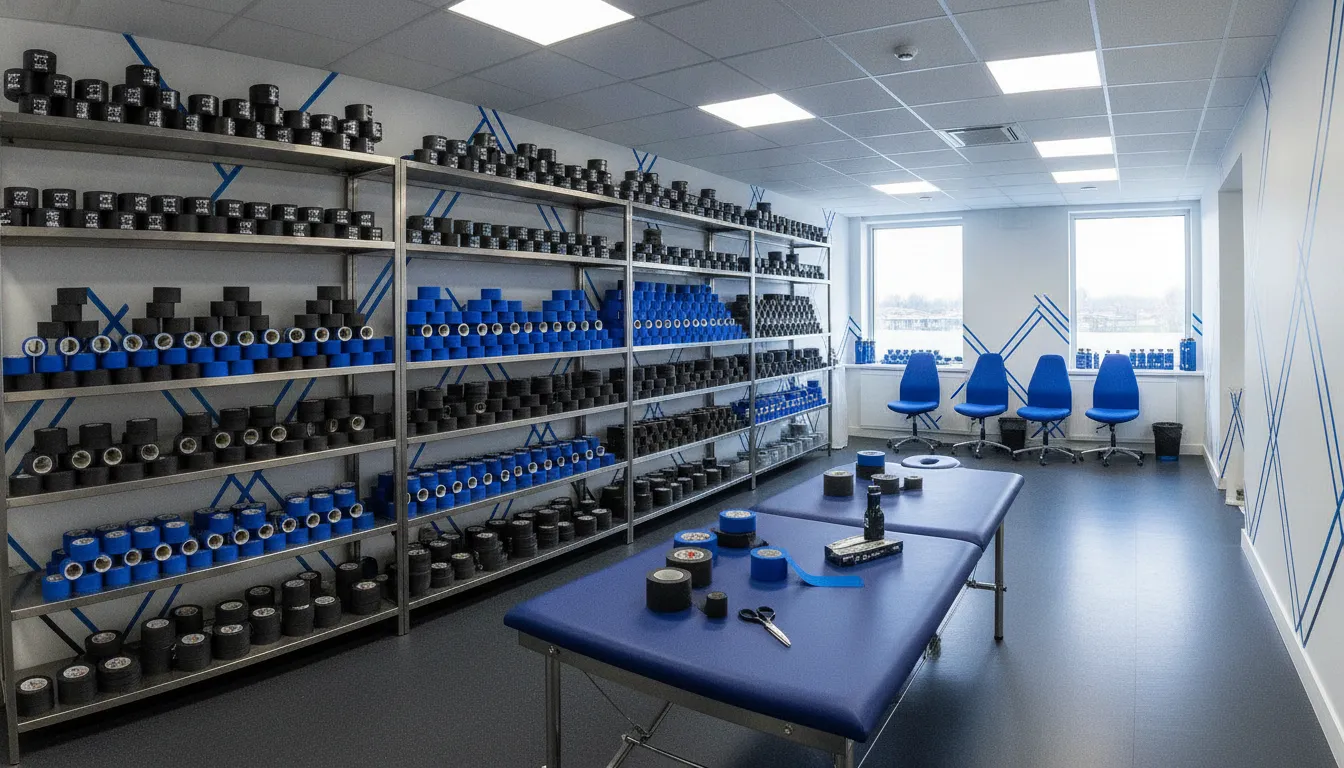
Why bulk kinesiology tape for teams makes sense
Bulk ordering makes sense when a team uses tape often enough to benefit from a predictable supply, fewer purchase cycles, and consistent stock for the full roster.
A team program has different needs from an individual athlete. One athlete can replace a roll whenever it runs low. A coach supporting a full roster must account for daily practices, event days, travel kits, and unexpected demand. If every roll is purchased separately, staff members spend more time checking supplies, placing orders, receiving packages, and moving stock between locations.
A case-based plan turns that scattered work into a repeatable process. Staff can count rolls at set intervals, establish a reorder point, and assign stock to the main training room and travel kits. That approach makes it easier to support athletes consistently without keeping an excessive amount on the shelf. Teams that are still comparing tape options can review this guide to kinesiology tape basics before setting a bulk plan.
More predictable purchasing
Predictable purchasing begins with a stable unit. When one case contains a known number of rolls, a manager can compare case usage across weeks, months, or training blocks. That is much clearer than reviewing a mix of one-off orders placed by different staff members. It also helps a program forecast supply costs before the season begins.
Bulk buying does not mean buying as much as possible. It means buying the appropriate amount at a practical interval. A small program may need one case at a time, while a multi-team facility may need separate cases for different rooms. In both situations, the goal is to keep enough tape available while avoiding forgotten stock.
Consistent access across the roster
A well-managed case gives staff a shared supply for team training support. Coaches do not need to reserve the final roll for one group or wait until the next shipment before restocking a travel bag. With a clear sign-out process, every staff member can see what is available and where it is stored.
Consistency also supports better application habits. Trainers can establish standard cutting, preparation, and use procedures with the same tape rather than adapting to a different product every week. For broader program planning, the team recovery routine guide explains how tape can fit alongside other post-workout support practices.
Individual rolls vs. 20-roll cases
Individual rolls suit trials and light use, while a 20-roll case better suits teams and facilities with regular, trackable demand.
The right format depends on how often the staff uses tape, how many athletes need it, and how easily supplies can be stored. Individual rolls offer a low-commitment way to evaluate a product or serve a small group. Cases offer a larger reserve that reduces repeat purchasing. Neither option is automatically right for every buyer, so a usage-based comparison matters.
| Decision factor | Individual rolls | 20-roll case |
|---|---|---|
| Best fit | Trial, occasional use, or one athlete | Teams, clinics, and busy training facilities |
| Ordering frequency | More frequent as usage grows | Less frequent with planned reorders |
| Budget planning | Simple for a small initial purchase | Easier per-case forecasting |
| Storage need | Minimal shelf space | Dedicated cool, dry storage area |
| Inventory method | Visual check of one or two rolls | Count, reorder point, and stock rotation |
When individual rolls are the better choice
Start with individual rolls if the team has not used the product before, if taping is infrequent, or if only a few athletes participate in the program. A trial period gives staff time to assess handling, athlete preferences, storage conditions, and actual weekly usage. It also creates the data needed for a smarter case decision later.
During the trial, record the date each roll is opened and the date it is finished. Note whether demand changes around competitions or high-volume training blocks. A few weeks of simple records will show whether individual purchases remain practical or create too many gaps.
When a 20-roll case is the better choice
A case becomes practical when staff can reliably use and manage the quantity. Teams that open several rolls each month, maintain multiple kits, or support several training groups are strong candidates. The case format gives those buyers a clear restocking unit and enough inventory to cover normal demand between orders.
Before ordering, compare current product details and case pricing on the 20-roll blue CannaTape Sport case page. Use the live page rather than an old spreadsheet so the decision reflects current information. Then divide the case price by the number of rolls and compare that figure with the current single-roll option.
Who benefits most from a 20-roll case?
Sports teams, physical therapy clinics, gyms, trainers, and multi-location programs benefit most when their regular tape use is high enough to justify organized case inventory.
A case is useful because it matches repeated demand. The strongest candidates are not simply the largest organizations; they are the organizations that know how tape is used and can store it responsibly. A small but active training group may use a case more efficiently than a large club with little demand.
School, club, and competitive sports teams
Team staff members must prepare for changing schedules. A normal week may include several practices and one event, while a tournament week may require multiple travel kits and longer days. A shared case gives staff enough flexibility to prepare the right kits without pulling rolls from another team's supply.
Programs with several sports should track each group separately. Runners, cyclists, golfers, CrossFit participants, and field-sport athletes may use different amounts at different points in the year. Separate records reveal which groups create demand and help a manager set fair internal allocations.
Physical therapists and busy training facilities
Clinics and training facilities often value consistency and organization as much as quantity. A central case can support daily sessions, while a small working supply stays near the application area. This setup keeps most rolls protected in storage and makes it easy to refill the active shelf.
Professionals evaluating CBD-infused options can review the CannaTape Sport guide for physical therapists. It explains the product category and helps staff decide how it could fit a compliant comfort and recovery routine. Each organization should also follow its own professional standards and application policies.
Gym owners, coaches, and personal trainers
A gym may keep tape for staff use, sell rolls to members, or include it in selected training services. Each model needs a different inventory plan. Staff-only stock may move at a steady pace, while retail demand can change quickly. Tracking these uses separately helps the owner see whether a 20-roll case is sufficient.
Coaches and trainers can also use case inventory to prepare event kits in advance. Each kit should have a fixed starting quantity and an assigned person responsible for returning and recounting it. That small step keeps rolls from disappearing into bags, vehicles, and storage closets after an event.
How to plan a bulk tape order
Plan a bulk order by measuring current usage, adding a reasonable event buffer, setting a reorder point, and confirming that suitable storage space is available.
The best order estimate comes from the team's own records. If no records exist, begin with a short measurement period rather than relying on assumptions. Count the number of unopened rolls on the first day, record new rolls opened, and count what remains at the end. Repeat the process across both normal and busy weeks.
Calculate average usage
Use a simple formula: rolls used during the tracking period divided by the number of weeks tracked. If a team uses eight rolls over four weeks, its starting average is two rolls per week. Multiply that average by the number of weeks the next order must cover. Then add a modest buffer for events, travel, or unusually busy training blocks.
Do not treat the first estimate as permanent. Review the numbers after each case. If unused stock continues to rise, reduce the next order or extend the purchase interval. If the team repeatedly approaches zero before the planned reorder, raise the buffer or place the order earlier.
Build a season-based forecast
Weekly averages are helpful, but an athletic calendar provides the context. Mark preseason, regular-season events, tournaments, travel periods, and off-season training. Assign an expected usage level to each block. This creates a practical forecast that recognizes demand is rarely flat throughout the year.
For multi-team programs, create one line for each team and combine the totals only after each schedule is reviewed. This stops one high-use group from distorting every estimate. It also allows a manager to explain why stock needs rise or fall in a given month.
Create a clear ordering checklist
- Count all unopened rolls in the main room, satellite rooms, and travel kits.
- Review average weekly usage and the upcoming event calendar.
- Confirm the number of rolls needed before the next planned order.
- Check current product information and available case options.
- Verify that the storage area has enough suitable space.
- Assign the new case a received date and rotate older stock forward.
- Set the next stock-count date and reorder point.
A checklist makes ordering easy to repeat even when a different staff member takes responsibility. Keep the checklist near the inventory log and update it whenever the program changes locations, adds teams, or changes its purchase interval.
Compare the black 20-roll CannaTape Sport case

What to look for in team kinesiology tape
Team buyers should prioritize verified product details, athlete comfort, dependable wear, clear usage instructions, and a case format that matches their real inventory needs.
Bulk quantity has little value if the tape does not suit the program. Evaluate the same qualities you would consider for an individual roll, then add the operational questions that come with case purchasing. Staff should know what they are buying, how it should be used, how it should be stored, and how quickly the team can reasonably use the supply.
Verified product specifications
Read the current product page before placing each order. Confirm roll or strip dimensions, quantity, color, materials, and listed product attributes. CannaTape Sport's CBD kinesiology tape uses a hypoallergenic, latex-free adhesive, contains 10mg of CBD per strip, and can be worn for up to five days. Product information should guide the purchase and athlete instructions.
If a staff member needs a smaller quantity before committing to a case, the electric blue CBD kinesiology tape product page is a useful starting point. Trial use can clarify handling preferences and approximate demand. Follow the listed instructions and make sure every athlete knows whom to ask for application guidance.
Fit with staff workflow
Think about how the tape moves from storage to use. Can staff quickly identify the correct stock? Is there a clean preparation area? Does the facility have a reliable method for recording opened rolls? A product that fits the workflow will be easier to manage consistently than one that creates extra steps.
Application education matters as well. A shared process helps staff make consistent cuts and prepare tape efficiently. The complete kinesiology tape overview can support internal education, but it should complement the product instructions and the guidance of qualified staff.
Clear brand and product fit
Teams may also consider color, athlete preference, and how the product supports an existing recovery routine. CannaTape Sport offers black and blue CBD kinesiology tape, giving programs two straightforward color choices. The CBD-infused format combines high-performance kinesiology tape with a recovery-oriented product category for active people.
Keep descriptions accurate when explaining the tape to athletes. Focus on training support, mobility, comfort, and post-workout routines. Avoid promising an outcome that the product information does not support. Clear, consistent language builds trust and helps every staff member explain the product in the same way.

How to store and manage bulk tape
Store bulk tape in a cool, dry, organized area, rotate older stock forward, and use a simple inventory log to keep supplies visible and ready.
Storage is part of purchasing. A case that sits in an unsuitable room or gets split across untracked locations becomes difficult to manage. Choose a central area before the order arrives, then decide how much stock should move into working areas and travel kits.
Set up the storage area
Use a clean shelf, cabinet, or labeled bin away from direct sunlight, moisture, and excess heat. Keep rolls in their original packaging until needed. Labels should be easy to read from the front so staff can count inventory without moving every item. Avoid placing tape in a damp locker area or leaving it in a hot vehicle between events.
If more than one product or color is stored, assign each option a separate labeled section. Put newly received rolls behind older rolls so existing stock is selected first. This first-in, first-out method is simple, visible, and easy for new staff members to follow.
Use a lightweight inventory log
An inventory log does not need complicated software. A clipboard, shared spreadsheet, or facility management tool can work. Record the count date, unopened quantity, rolls added, rolls moved to kits, and the staff member completing the count. The log should take only a few minutes to update.
Review the log at a fixed time each week during busy periods and less often when usage slows. Consistent timing makes changes easier to spot. If the count drops faster than expected, check upcoming schedules and satellite kits before changing the full-season forecast.
Manage travel kits separately
Travel stock is easy to overlook because it leaves the main facility. Give each kit a fixed quantity, a clear label, and an owner. Count the kit before departure and again after return. Move unused rolls back to suitable storage if the kit will sit in a vehicle or equipment area.
This process also stops teams from placing emergency orders when several rolls are simply stored in travel bags. One complete count across every location gives the manager a true picture of supply and supports a better reorder decision.
When should you switch from individual rolls to a case?
Switch when recurring roll purchases become inefficient, weekly demand is consistent, and the program can use and store a full case responsibly.
The switch should be based on evidence, not team size alone. A growing pile of receipts, repeated rush orders, and frequent transfers between kits are signs that individual buying may no longer fit. A usage log confirms whether those issues reflect steady demand or a temporary spike.
Signs that a case is practical
- The program opens multiple rolls during a normal month.
- Staff repeatedly place small orders or make last-minute purchases.
- Several teams or locations share the same tape.
- The facility has a suitable area for organized case storage.
- A staff member can own inventory counts and reorders.
If most of these statements describe the program, compare current single-roll and case options. Calculate the full cost of each approach and consider the time spent managing repeat orders. The goal is a purchasing method that supports both the budget and the staff workflow.
Signs that individual rolls still make sense
Continue with individual rolls when usage is rare, uncertain, or limited to a small trial. A case can create unnecessary stock if demand is not established. Individual buying also makes sense when suitable storage is unavailable or when the program is still comparing formats.
Revisit the decision after a defined period. A quarterly review works for many programs, while high-volume facilities may want to review monthly. A scheduled decision keeps staff from switching too early or continuing inefficient small orders for too long.
How to get more value from every case
Get more value by controlling access, standardizing preparation, tracking usage, protecting stored rolls, and reviewing each case before the next purchase.
Value is not just the initial price. It includes how efficiently staff manage the case from arrival through the final roll. A few repeatable habits can reduce misplaced stock, improve forecasting, and make the next order easier to plan.
Assign ownership and set a reorder point
Choose one primary inventory owner and one backup. The owner checks the full supply, updates the log, and places an order when stock reaches the agreed reorder point. The backup follows the same process when the owner is away. Clear ownership stops staff from assuming someone else has already ordered.
Set the reorder point based on lead time and average use. If the team normally uses two rolls per week and wants a two-week buffer, the basic reorder point is four rolls. Add any known event demand before finalizing the number. Revisit the point whenever usage or purchase timing changes.
Standardize preparation and education
Written preparation steps help staff use tape consistently. Keep the process concise and aligned with current product instructions. Qualified staff should lead application decisions, and athletes should know where to find guidance. Consistency supports a smoother training-room workflow and more accurate usage estimates.
Programs can also share a concise educational resource with athletes who want to understand where tape fits in an active recovery routine. The kinesiology tape recovery guide offers useful background and can help set appropriate expectations.
Review results before reordering
When the case reaches the reorder point, take five minutes to review it. How long did the case last? Did stock run low during a specific event? Were rolls moved without being recorded? Did the program maintain too much inventory? Answers to these questions turn each case into better planning data.
Adjust one variable at a time. Change the buffer, reorder timing, kit quantity, or count frequency, then measure the result. Small, measured adjustments create a more dependable supply plan without making the process difficult for staff.
Frequently Asked Questions
These quick answers cover the most common questions teams ask before choosing and managing a bulk tape supply.
What are the benefits of buying bulk kinesiology tape for teams?
Bulk purchasing gives teams a consistent supply, simplifies inventory planning, reduces repeat ordering, and supports more predictable per-roll budgeting. It is most useful when demand is regular and a staff member can manage the stock.
Is bulk kinesiology tape more cost-effective for athletic teams?
It can be when a team uses tape consistently. Compare the current case price with the same number of individual rolls, then include shipping and expected usage before deciding. Current product and discount pages provide the most reliable purchase information.
How much tape is in a bulk kinesiology tape roll?
Roll length depends on the product selected. Check the current product page for exact dimensions, then estimate how many applications your staff typically cuts from one roll. A short trial can improve that estimate before a case purchase.
How should teams store bulk kinesiology tape?
Keep unopened rolls in a cool, dry, organized area away from direct sunlight, excess heat, and moisture. Rotate older stock forward, protect travel inventory from unsuitable conditions, and keep a simple inventory log.
Build a dependable team tape supply
A dependable supply starts with a clear count, a realistic usage estimate, and a repeatable reorder process. Teams that use tape regularly can gain practical value from a 20-roll case, while lighter-use programs can begin with individual rolls and measure demand. Choose the format that fits the program today, review the numbers after every purchase, and adjust as the season changes.
For teams ready to compare a case option, review current details, confirm the quantity fits your forecast, and assign storage and inventory ownership before ordering. That preparation keeps the focus where it belongs: giving athletes consistent training support throughout the schedule.
Bring coaches, trainers, and purchasing staff into the plan before setting the first order quantity. Coaches can explain upcoming schedule demands, trainers can estimate application volume, and purchasing staff can confirm order timing and storage responsibilities. A short planning conversation gives every stakeholder the same expectations and reduces confusion once the season becomes busy.
After the first case, share a concise review with the same group. Include the number of weeks the case lasted, the lowest stock count, any event-related usage changes, and the proposed adjustment for the next order. This evidence helps the program make a confident decision instead of repeating an estimate that no longer matches demand. Over time, the process becomes a reliable part of season preparation rather than an urgent response to a nearly empty shelf.